Author: Elise Kindya

  • The Therapeutic Benefits of Sound Healing: How Sound Can Support Mind, Body, and Nervous System Regulation

    The Therapeutic Benefits of Sound Healing: How Sound Can Support Mind, Body, and Nervous System Regulation

    The Therapeutic Benefits of Sound Healing: How Sound Can Support Mind, Body, and Nervous System Regulation

    In a world filled with constant stimulation, many people are searching for ways to slow down, reconnect with themselves, and find relief from stress. Sound healing has emerged as a powerful complementary practice that invites deep relaxation, mindfulness, and nervous system regulation through the intentional use of sound and vibration.

    Whether experienced through crystal singing bowls, gongs, tuning forks, drumming, chanting, or guided sound baths, sound healing offers an opportunity to shift out of survival mode and into a state of rest, reflection, and restoration.

    What Is Sound Healing?

    Sound healing is a therapeutic practice that uses specific sounds, frequencies, rhythms, and vibrations to promote relaxation and overall well-being. While sound has been used for healing and spiritual practices across cultures for thousands of years, modern interest in sound healing has grown alongside increased awareness of the nervous system’s role in mental and physical health.

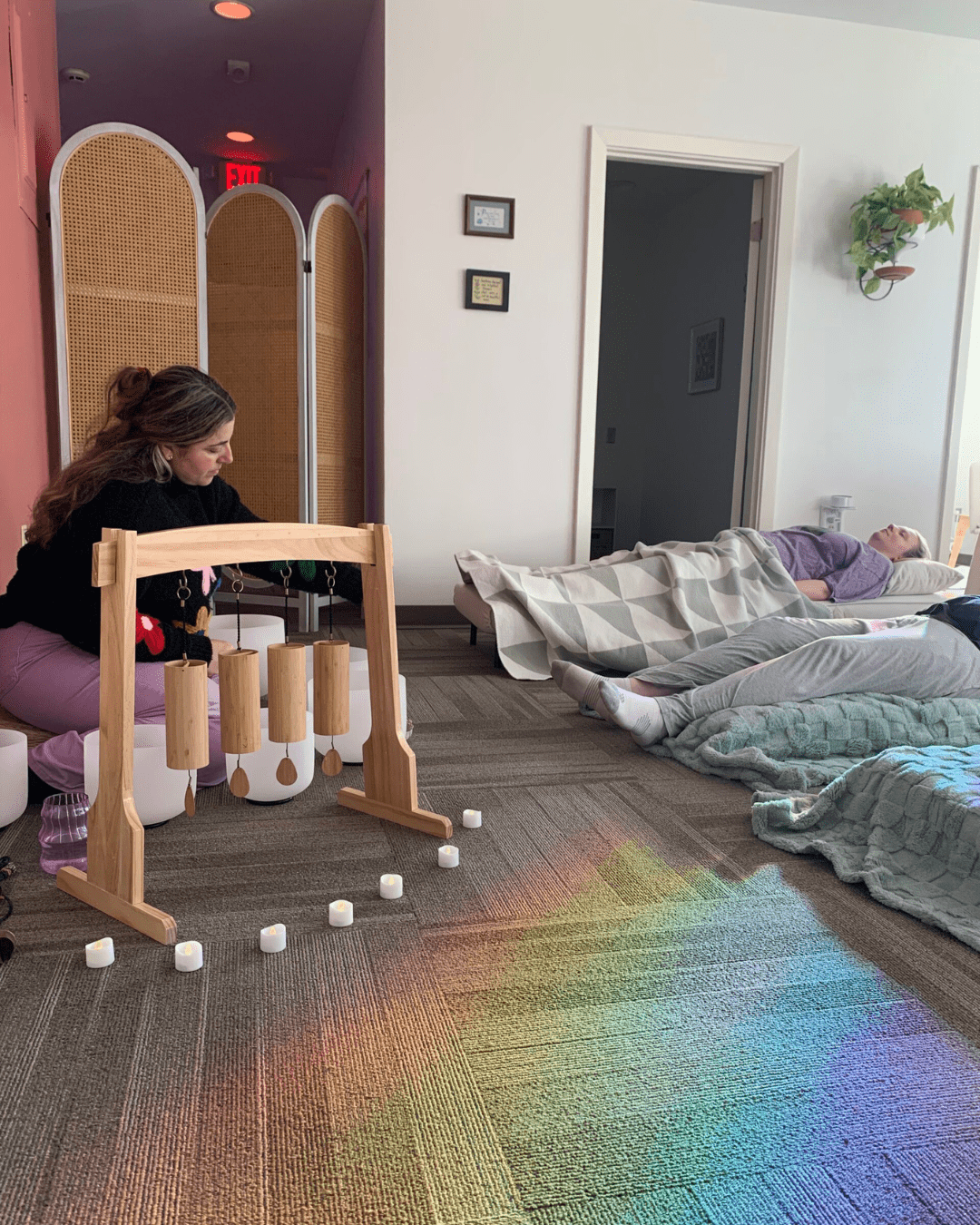
    During a sound healing session, participants may lie comfortably while listening to instruments such as singing bowls, gongs, chimes, drums, or guided vocal toning. The experience is often deeply meditative and can help create a sense of calm, presence, and connection.

    How Sound Affects the Nervous System

    One of the most significant benefits of sound healing is its ability to support nervous system regulation.

    When we experience chronic stress, anxiety, trauma, or burnout, the body can become stuck in a heightened state of alertness. Relaxing sounds and rhythmic vibrations may help encourage a shift toward the parasympathetic nervous system, often referred to as the “rest and digest” state.

    Many participants report feeling:

    • Deep relaxation
    • Reduced muscle tension
    • Improved mood
    • Greater mental clarity
    • A sense of emotional release
    • Better sleep quality

    These effects may occur because sound provides a focal point for attention, helping the mind move away from racing thoughts and into the present moment.

    Sound Healing and Mental Health

    Sound healing is not a replacement for therapy or medical treatment, but it can be a valuable complementary practice.

    Research on singing bowl interventions suggests potential benefits for reducing symptoms of anxiety and depression while improving sleep quality and overall well-being. A 2025 systematic review examining 19 clinical studies found promising evidence that singing bowl practices may support mental health outcomes across a variety of populations, although researchers note that more high-quality studies are needed.

    For many individuals, sound healing creates a unique space where they can simply receive, rather than analyze or problem-solve. This can be especially beneficial for those who feel mentally exhausted or overwhelmed.

    Supporting Mindfulness and Meditation

    Many people struggle to quiet their minds during meditation. Sound can act as an anchor for awareness, making meditation more accessible.

    The sustained tones of singing bowls, gongs, or chimes encourage listeners to focus on the present moment. As attention settles into the sound, it often becomes easier to let go of distractions and enter a state of mindful awareness.

    This combination of mindfulness and relaxation may contribute to reduced stress levels and increased emotional resilience over time.

    The Potential Physical Benefits of Sound

    Researchers continue to explore how sound and vibration influence the body. Studies examining acoustic stimulation suggest that certain sound frequencies may affect cellular activity, tissue repair, and healing processes, though much of this research remains in its early stages and requires further investigation.

    While sound healing should not be viewed as a cure for medical conditions, many individuals report experiencing:

    • Reduced physical tension
    • Improved sleep
    • Lower perceived stress
    • Increased feelings of vitality
    • Enhanced mind-body awareness

    These outcomes alone can have meaningful effects on overall health and quality of life.

    Why Sound Healing Works Best as Part of a Holistic Approach

    Healing rarely happens through a single intervention. Instead, well-being is often supported through a combination of practices that help regulate the nervous system, process emotions, and cultivate self-awareness.

    Sound healing can be a valuable addition to:

    • Individual therapy
    • EMDR therapy
    • Breathwork
    • Yoga
    • Meditation
    • Reiki
    • Mindfulness practices
    • Stress management programs

    When combined with other therapeutic approaches, sound healing may help create the internal conditions needed for deeper healing and personal growth.

    Sound Healing and Reiki at PORTAL Therapy

    At PORTAL Therapy, our sound baths often incorporate Reiki to create a deeply restorative and supportive healing experience.

    Reiki is a gentle energy healing practice that promotes relaxation, balance, and overall well-being. During a Reiki-infused sound bath, participants are immersed in the soothing vibrations of crystal singing bowls, chimes, a gong, and other healing instruments while also receiving Reiki energy. The combination of sound and Reiki can help quiet the mind, release tension, and create space for emotional and energetic renewal.

    Many participants describe feeling grounded, peaceful, and deeply connected to themselves after these experiences. While sound healing works through vibration and mindful awareness, Reiki offers an additional layer of support that encourages relaxation and self-healing. Together, these modalities can help calm an overstimulated nervous system and provide an opportunity to slow down, reflect, and reconnect.

    As a Reiki Master Teacher and trauma-informed therapist, I intentionally create a safe, welcoming environment where participants can simply rest, receive, and be present with whatever arises. Whether you are seeking stress relief, emotional balance, spiritual connection, or simply a pause from the demands of everyday life, Reiki-infused sound baths offer a unique opportunity to nurture your mind, body, and spirit.

    No prior experience with Reiki, meditation, or sound healing is necessary. You are invited to come exactly as you are.

    Learn more about 1-1 Reiki with Elise at PORTAL Therapy here.

    Final Thoughts

    Sound healing offers a gentle yet powerful way to reconnect with yourself in a world that often demands constant productivity and attention. While research is still evolving, growing evidence suggests that sound-based interventions may help reduce stress, support emotional well-being, improve sleep, and encourage relaxation.

    Sometimes healing does not require more effort. Sometimes it begins by simply slowing down, listening, and allowing yourself to receive.

    If you’re curious about sound healing, consider attending a sound bath, working with a trained practitioner, or incorporating calming sound practices into your self-care routine. Your nervous system may thank you for it.

    Scholarly Source

    Cai, Y., Yang, G., Liu, Y., & Zou, X. (2025). Therapeutic effects of singing bowls: A systematic review of clinical studies. Integrative Medicine Research. Available through the U.S. National Library of Medicine: https://pmc.ncbi.nlm.nih.gov/articles/PMC12063014/

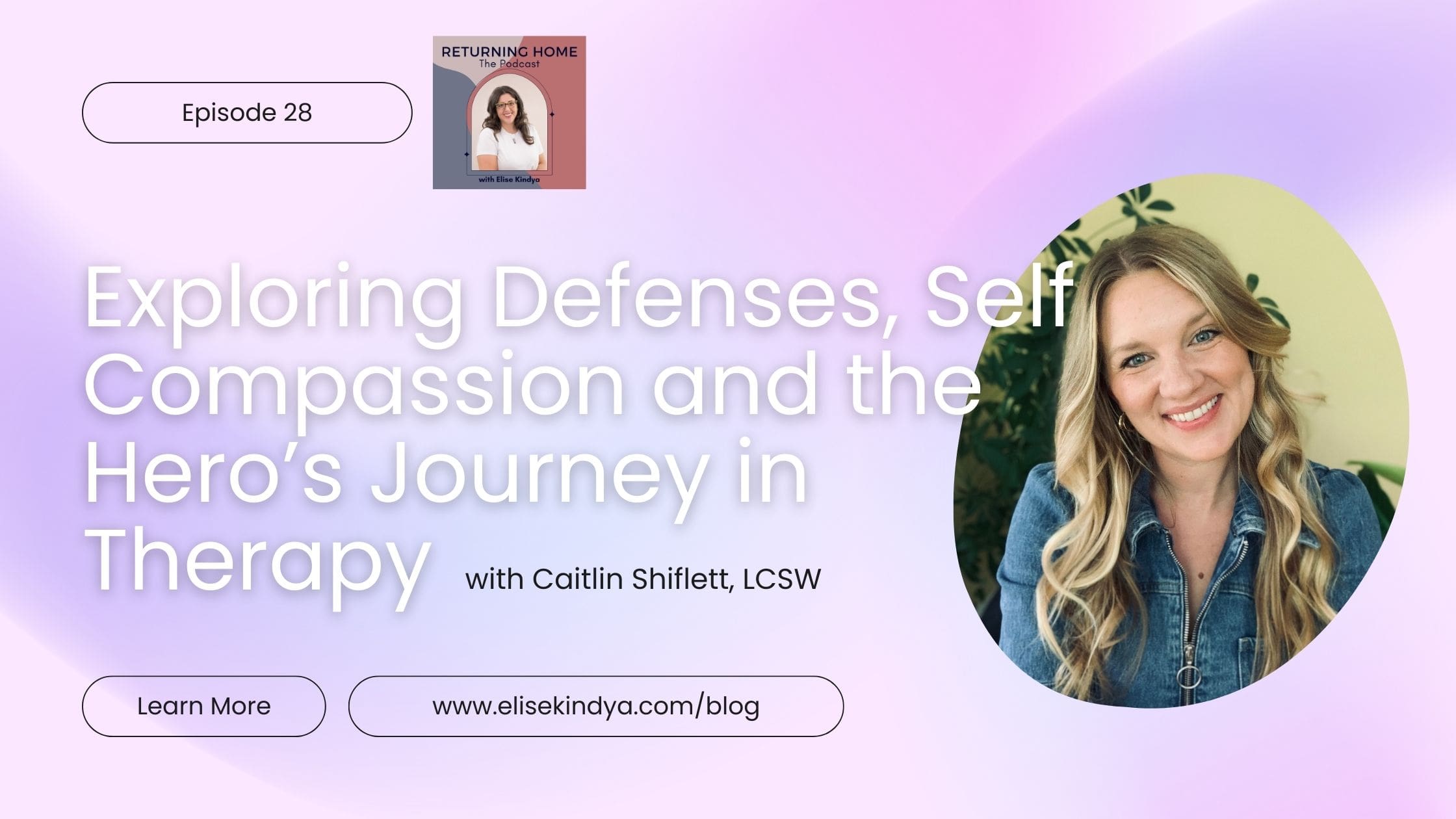
  • 28. Exploring Defenses, Self-Compassion, and the Hero’s Journey in Therapy with Caitlin Shiflett, LCSW

    28. Exploring Defenses, Self-Compassion, and the Hero’s Journey in Therapy with Caitlin Shiflett, LCSW

    Episode Summary:
    Join us for a deep dive into the heart of experiential therapy with Caitlin Shiflett, where we unpack the profound role of defenses in our suffering, how anxiety serves as a biological response to emotions, and the journey of finding our true selves. Caitlin explains the foundations of Intensive Short-Term Dynamic Psychotherapy (ISTDP), how it targets defenses and anxieties, and the challenges therapists face as learners. We also discuss her upcoming self-compassion group, rooted in mindfulness and self-kindness, and the impact of integrating therapeutic learning with self-compassion.

    Key Discussion Points:

    1. Understanding Defenses in ISTDP
      • Exploring how defenses protect us from intense emotions and the role of experiential therapy in reducing suffering by targeting these defense mechanisms.
      • Why anxiety in ISTDP is seen as a nervous system response rather than a feeling.
    2. Embracing the Hero’s Journey in Learning
      • Caitlin’s own “hero’s journey” as a therapist and her journey through ISTDP training, which required vulnerability, resilience, and a confrontation with her own self-criticism.
      • How creative growth requires both commitment and self-compassion, moving beyond self-criticism to embrace learning through mistakes and practice.
    3. The Role of Self-Compassion in Healing
      • Caitlin’s upcoming self-compassion group, inspired by Kristen Neff’s research, blends self-kindness with the power of taking action for oneself.
      • How group work fosters common humanity, helping participants to feel connected through shared struggles and building resilience against self-criticism and shame.
    4. Navigating Vulnerability and Visibility in Private Practice
      • The realities of marketing and vulnerability on social media as a therapist, along with strategies to manage the challenges of feeling “invisible” online while promoting meaningful work.

    Takeaways:

    • Awareness of Defenses: Recognizing personal defense mechanisms can help reduce anxiety and open the door to emotional authenticity.
    • Self-Compassion as a Path to Growth: Learning to integrate self-kindness and structured reflection enables more profound healing, particularly in group settings.
    • Learning as a Process: The journey to mastery involves embracing vulnerability, acknowledging failures, and finding safety in the learning environment.
    • Navigating Online Spaces as Therapists: Embrace patience and persistence, as sharing valuable content in small communities can still make a significant impact.

    Upcoming Group:
    Caitlin’s “Yin and Yang of Self-Compassion” group begins early 2025, offering a safe, trauma-informed environment for women focused on self-kindness and empowerment.


    Follow Caitlin Shiflett:


    Transcript:

    Elise Kindya: Welcome back to returning home the podcast. This is your host Elise. And I today have a special guest in my office. We’re doing this in person, which is so fun, but I have Caitlin, shiflett, who is also an lcsw and Caitlin, do you want to just say a little bit about yourself or What brings you on the podcast today or also

    Caitlin Shiflett: We’re getting on Friday and I will always opt for an in-person moment. As opposed to ual virtual has become such a necessity obviously ever since covid and it’s great, it makes things more convenient, but if I can come in person I’m coming in person. Yeah, thank Yeah, you too and my God, I think you’re probably speaking. Everybody’s language right now. It’s so hard being online Having this in person part to heart. Yeah. my freaking

    Elise Kindya: Okay. Yeah, we were in grad school together. Yes.

    Elise Kindya: Those years were just a blur while they were going on and of course, even more. So now I know 12 years ago at this point. Yeah, I keep trying to think I had to

    Caitlin Shiflett: Feel some ear, did you graduate and I couldn’t pull it up and then I was thinking I was like, was that 12 or 13 years ago? my God. Yeah yeah. We were in grad school together and then kind of just really ended up coming together more as well. You had already been in private practice for a couple of years and I was going to your website is she What do I do? and then Yeah, my first year of private practice you kind of called the group together which has been really helpful, a group of us licensed therapist to meet as peer support once a month and it’s been really nice to reconnect in this phase of life.

    Elise Kindya: Yeah, definitely. I know, sometimes I think about that DSM class with Gail and my goodness. I was not even ready for all those presentations. And everything that going into grad school, I had been out of undergrad for a little bit of time. Yeah.

    Elise Kindya: And I was like this is what I’m supposed to get. Yeah it was very nerve-wracking. I think. Now I look back and I’m like, okay, so there was an internship, there were classes, there were some times two jobs like How did it all in? I know today. these days I worked five hours like I am going to literally pass away. And back then it’s like you’re leaving the house at 8. Am you’re not coming home till 10 p.m and you have a whole bunch of stuff to do in the middle?

    Caitlin Shiflett: Yes. early days, I think maybe it was Starbucks or maybe it was an independently owned coffee place in the old Cabell library. those people movie my name. yeah, it was like at night time. 

    Elise Kindya: We really need this. You’re Main Line it into my day. Yes. Yeah, really.

    Elise Kindya: Yeah, and I know that one of the bullet points, we kind of wrote down for today was talking about the learning process. Yeah. And the hero’s journey of heroes journey of learning.

    Caitlin Shiflett: And I think back to those days and I’m just like, Wow, how did my brain do that go girl, it’s great. Your trust yourself. Yeah. That’s so cool as it pertains to. Now, I’ve been thinking about this a lot lately. Mainly because of a big learning process. I’ve gone through in the last few years. Undertaking, Something, I’m so passionate about which is istdp therapy, which stands for Intensive short-term Dynamic Psychotherapy. If you want to know any of the particulars about that, we can chat about it.But of course, when we come out of grad school, we’re not taught how to be therapists. And there’s a whole journey that you go on after grad school, about finding what’s out there, what? Really speaks to you and then undertaking a learning process.

    Elise Kindya: When did you discover However, yeah, because you were

    Elise Kindya: When you started directly at the YWCA. Is that right? Yeah. So when you were working at the YWCA, did you learn about it there or How did you hear about it?

    Caitlin Shiflett:  Yeah, so I was in another kind of big learning process which I had done a yoga therapy certification and have always been very invested in and big believer in and just knowing that the mind body connection is so huge and just exploring different avenues for that. And at that time, yoga therapy was what was really speaking to me. But in my clinical supervision, I guess there was something about the way that I was asking questions or talking about my work. Where at the time, my supervisor was like, you need to read John Frederickson. Who is a big name, an Isttp, a big teacher, not the Creator, but Kind of like a leading voice within the iscdp community. My supervisor had also done the psychodynamic program at the Washington School of Psychiatry in DC. Where they have an ISTDP track there. So she was like, if this speaks to you the way I think You could also go train in it, pretty close by you have access to that training. So, yeah, I get John Frederickson’s creating Change. I start reading it. I’m just like, my God. it’s just, like everything was jumping off of the page at me. Just spoke to my heart, spoke to so much of how I wanted to sort of be thinking and showing up in the room. And it just seemed to really align with. What? I knew, I didn’t know. Wow, yeah. so yeah, that was my first introduction to is tp, was through my supervisor then reading that book. Was that the Y your supervisor so why was supporting me and that’s supervision but that was with Mackenzie Casad, at Cypress counseling. All right. Supervision with cool? Yeah, yeah. So yeah. She was like listening between the lines and what you were saying and introduced this whole new kind of framework for how to work with clients.

    Elise Kindya:  what would you say to someone that? they’re hearing you say is tdp. This is the first time they’re ever hearing it. What could they expect in the therapeutic alliance with you?

    Caitlin Shiflett: Yes, great question. I guess maybe just starting with the name would be helpful and kind of breaking down a little bit about what. All of those letters mean? I feel loves an acronym. Our field loves Absolutely. Yes. so I asked short-term dynamic psychotherapy. The word intensive is really speaking to the focused nature of the therapy. So, istdp, as a whole, is, a complete metapsychology in and it’s roots are in, psychodynamic therapy and psychoanalysis with its own particular departures. When the creator hubby, Davin Lou, who was an Iranian psychoanalyst created it. He was a psychoanalyst and he was basically coming from this place of seeing the effectiveness a psycho elantic analysis but also kind of saying What are some things that we could do to help sort of speed up this process for people because people are in psychoanalysis for years and going multiple times a week seeing benefits. But yeah, I’m very involved sometimes long drawn-out process. So I intensive stands for this. Focused nature of the therapy of focus on feelings and all the components of feelings when you say focused, meaning and intensive. 

    Elise Kindya: You’re coming in the therapeutic into the space that you’re having with your Therapist, and we’re not talking about. The weather what you did over the weekend. Yeah, catching up. it’s very much. The treatment plan is written in a way that’s like I keep sabotaging, x, y and Z. I really need help with this and that’s what you’re talking about. Is that what you mean?

    Caitlin Shiflett: Yeah, absolutely. And I mean that also goes and the same parallel process of one human sitting with another human.

    Elise Kindya: Sure, of course, the rapport and the warmth is really important but exactly what you’re saying of We’re not going to waste time together, you’re not the Gossip doctor, That’s of Internet loves to call therapist sure?

    Caitlin Shiflett: Yeah exactly right. You’re not like a Not to say just making sure the content of what is talked about. Is also pretty focused. absolutely Yeah, we also place a real emphasis on the mind body connection and feeling feelings in the body. Yeah. So that is also part of the intensity because it’s a hard thing to do totally. and working with that, in a particular way is also what that intensive part of the acronym is about Short-term the ST. The little misleading, right? Yes ISTDP has shown in research to reduce treatment length but whatever that treatment length is going to be, is what it’s going to be. So for someone that could look like 15 sessions for another person that could look like three years. I mean, this isn’t about saying We’re gonna get you in and out. That’s a short course of treatments, maybe it’s gonna be shorter. Than what another modality or approach could provide to that person. But yeah, It’s not about trying to go as quick as possible. It’s just saying that through the focused nature of our work. Hopefully we can really get somewhere. Yeah. And then psychotherapy is really speaking to the psycho dynamic roots of the model. So we are Talking about the Paying attention to how the unconscious speaks. And, Of course, a lot of that awesome involves talking about defense mechanisms, pointing them out, getting really clear about them.

    Caitlin Shiflett: So what someone could expect and in terms of that conscious therapeutic alliance that you’re talking about, that’s a really big part of ISTDP. That we actually focus on six different elements, if you will of a conscious therapeutic alliance and we go slow in the beginning. So that we can go fast later on. When you have that strong conscious therapeutic alliance, where you’re talking about things like, will and positive goals, and our task together introducing people to their kind of triangle of conflict, which we can talk more about if we want all of this. Set this really strong foundation to be able to do the challenging stuff later It’s like you set it up in a way so that when we get to a place where we’re talking about, Someone’s defenses, Which are strategies and adaptations that we have developed to survive. Yeah, that are no longer helping us. that are getting in our way, When we start to talk about those things. When we start to identify them, they get clear about them. And we kind of say, Do you see how this is hurting you? that’s a hard thing. Defenses, are really hard to change. They’re hard to let go of, which is always the client’s choice, of course, But we set up that conscious therapeutic alliance in the beginning knowing that, we’re going to be pointing these things out. Hey, if I see you doing something or Hey, if I see that playing out, is it okay? that I speak to that? So that it doesn’t feel like when we go to do that later on in the work that we are talking about the person, right? It’s about the defense you’re using, It’s not it’s this mechanism, the tool.

    Caitlin Shiflett: yeah, and helping people see themselves as separate from their, but you are not just this way. This is a thing that you do and we can have so much compassion for maybe why you do it. Sure. But yeah, setting up that conscious therapeutic alliance and are really, explicit way in the beginning, helps us be able to do that harder stuff later on. yeah, that sounds so powerful. it’s changed my life. Both personally as a patient and you go to this type of therapy I do. yeah period therapist is in therapy I been here. Yeah when I was in that deep sort of learning process. I was in a different form of therapy and I I got to do this in vivo. if I’m learning it, it helps experience it myself. Yeah, so yeah, has changed my life, both personally, and professionally, and I love Spreading the Gospel.

    Elise Kindya: Yeah, I really want to talk so much more about that. I’m very curious about the defense, what you say about going slow to go fast? as you were talking about someone using a defense mechanism, as the mechanism or as a tool And our brain does this for us, it narrows our field of options because to have every option is so overwhelming. So it’s like okay this is the thing that has worked for me. So this is going to be that groove that I go In this work. Do you then not to say fill that groove in, but does it help to expand the clients? View of that’s one behavior on a shelf. I’m almost looking at my shelf of miniatures, for Sandra right where it’s like, I could just always choose the tiger because it’s scary and it’ll rip people apart or whatever. And if that’s my defense mechanism, I want to just be aggressive, But look at all these other ways that I could show up, I could choose the bunny rabbit. the gorilla, I could choose the puppy. I could choose the kitten. I could choose the person, whatever it is. Does your type of therapy help people? Then choose a different. Not to say defense mechanism, I guess but a way to show up. Without using that same mechanism, 


    Caitlin Shiflett: absolutely. Yeah, because defenses are essentially, what cause our suffering at least. In this model and I believe that to be true just sort of in general. So the focus of the therapy isn’t necessarily on defenses but the defenses are a big part of the work. The focus of ISTDP or any experiential therapy is on your feelings emotions, or affects that’s all the same. Those are three words for the same thing. So if you can call up an image of an upside down triangle where you’ve got the flat sort of bar at the top and then this point at the bottom, at the top of that poll, you have anxiety and you have defense and then at the bottom sort of the piece of the iceberg you can’t really see would be feelings like an F for feelings down there and this is typically where we get cut off. So has its own way. based on neuroscience of helping to observe different anxiety, pathways which is really helpful in the work itself because you cannot ask for feeling pursue feeling if someone’s anxiety threshold is too high, What ends up happening is that we have unconscious feelings, Whether that is sitting across the dinner table, from your mom, who comments on the dinner that you ordered and you notice yourself getting really anxious. Let’s say or what about defensive, Yes. And so you defend to try to help, bring that anxiety down, and that could be, of course, changing the subject or it could be lashing But the defenses are there to help lower that anxiety? Your experiencing that the feeling is triggering the anxiety and then the defense comes in. Yes. And whatever your chosen way of defending yourself. Whatever. That’s on many. limitless. Right. We have. A shirt all the time in the world and then also in therapy. So I’m sure, even in your own work. It’s and how does that make you feel angry? Immediately. Start rationalizing and intellectualizing about it. And, it’s not unhelpful to be able to talk it through. But also, if you experience a great deal of anxiety that comes in engulfs your feelings, then helping your body’s capacity to grow to tolerate, feeling is what we’re doing. And so, this is why we sort of target and restructure defenses that get in the way of that process happening so that we can have our feelings without becoming Home anxiety rhythm, Right? Yeah. So in this model anxiety, isn’t seen as a feeling correct anxiety is seen as our nervous system biological response to what feels threatening in this case, feelings. Caused by. Early attachment ruptures. So, if you’re kind of exposed to that same trigger again and again, and again, throughout life before we can even remember which basically kind of let us know what feelings were acceptable and which ones weren’t, Mom kind of turns away every time there’s anger and this is through adequate parenting, this isn’t about coming to therapy to the bash. Parents are hate parents or anything like that. But I mean your caregivers own anxiety, around certain feelings, and their children play out in this way, Where you might be exposed to this, disconnection from your caregiver anytime, you’re saying, angry or extremely sad whatever it Is that we very quickly biologically figure out that we will do, whatever it is, that we need to do to protect that connection and to protect that relationship. So that means repressing anger. If that means hiding tears, if that means, whatever that’s going to mean, then later on those feelings, may trigger are a great deal of anxiety for us and then we pop over to a defense to try to manage that But those defenses that keep us away from our feelings are ultimately, what causes, a great deal of suffering, and kind of really varies our true selves, right? Yeah. So yeah, through this process, then you’re helping people find their true selves. Absolutely. I love thinking of it and in that way. Yeah.

    Elise Kindya: Yeah, yeah, tell me more about this hero’s journey of learning that you’re on because yeah they didn’t teach us that in grad school.

    Caitlin Shiflett: And so you’re learning about this as you were working My sort of final year at the YWCA was my first year in the program and then I really doubled down on this whole, hero’s journey and learning and started my private practice in my second year of the program. wow. But there was sort of like a double learning journey going on at the time of both the program and then trying to figure out private practice. A couple of layers to that. learning ISTDP taking on something that’s big and complicated. will really bring up your s***. Sure. There’s no better way to really say it. Yeah, and it’s interesting because There’s some research papers and some dirty stuff out there. That will really show you the data on certain personality types and how they react to. Learning our own defenses against learning, whether that’s our perfectionism or our obsessiveness or, the way some people get really depressed as they learn because it’s hard. And the demand for us to know and the self-attack that can come from. Maybe not absorbing the information quick enough or being further along or what it’s like to show your work because in istdp training, you’re recording your sessions and then watching them you watch them with your supervisor and then you’re learning, you’re watching them in small supervision groups, which is really vulnerable. Because therapists Behind closed doors, most of the time, right? So that’s brand new. and when we think of Hero’s journey, we think of starting off on this quest, your motivated, you’ve got your backpack, you are like going out there on this mission to do this thing. And along the way, there’s these trials and tribulations, and you meet some foes and you learn all of these lessons and then you return with all of this,: Wisdom and knowledge. And a lot of that has nothing to do with actually learning the content, but what you actually end up learning about yourself So a couple of things that I learned in my learning process was how hard I was on myself, in new ways that I didn’t even really realize. my own impatience, the level of demand and where I think my capacity should be versus, just sort of like letting my brain take in, what it’s going to take in. And then as that integrates then you go back and you learn more. It can’t be. it can’t be this, fire hose of information that you just sort of absorb and you’re good and I even notice that when I drink at one time, too much water. I’m like, okay that Little over fire hose. my God. Yeah, yeah, sorry, no. So true. it really brought up a lot of just elements of where we’re self compassion. Just was not present you were using it. Yeah. Yeah.00:25:00

    Elise Kindya: and also the way that when we’re learning, It’s like we want to get to the place of mastery and we want to get to this place of where it’s just kind of like in you and integrated and now you can be creative and just kind of float with it. that’s the hope. you want to get to that place.

    Caitlin Shiflett: But before that, Creativity can calm before that Ever really shows up there are hours and hours, and hours of learning and practice and work that has to come before that. And it’s like, we just want to sit down and I’ll speak for myself. Write the masterpiece or know how to play the instrument or whatever it is, but of course, that doesn’t happen, before any beautiful performance you see there were thousands and hundreds of hours of work and practice and failure that came before that moment. Yeah. And that’s been something that’s been a huge. Takeaway is like, before that flow comes before that creative license. Presents itself is, like, you’re gonna grind and you’re gonna fail, and you’re gonna bump into these things and Embracing that. More. Has been huge. So awesome. Yeah.

    Elise Kindya: Yeah. What has been like was there a time that you were in the middle of that training and you were like you met a foe? That was just too you’re like I got to throw in the towel. was there any moments of that or 

    Caitlin Shiflett: Yeah, I think that foe was my own Superego. Yeah, the call is coming from inside the house. Yeah, it would be really easy to show up with my supervisor. Michelle may who if you don’t follow her on Instagram, you totally should maybe link her and, it’s It’s awesome. But it would be really easy to show up to those classes or to those supervisions with her with my, best work, something that I felt really confident in, and having to kind of say, that’s not where I need the help. So I have to sort of get over myself here and show the work where I need the Show the session that Show the session where my Learning capacity where I needed some help. Right? and I would say that the only foe there was just my own self criticism, my own self attack. and so, yeah, a lot of just capacity building overall through that whole learning process. Yeah.

    Elise Kindya: Yeah. That’s really cool that you let yourself do that. What would you say to someone that is maybe in the contemplation phase of Entering the hero’s journey of learning. But they’re just aren’t totally sold on it yet.

    Caitlin Shiflett: That’s a great question. Is that in order for learning. To happen in the way, where it feels it’s embodied like it starts. It can start becoming some language that you can speak whether that’s therapy or Something creative or whatever it is. That there has to be safety. There has to be : inner safety. So, being really aware. Of the tone from inside the house. becoming aware of your stuff that’s coming up in a learning process and being willing to see that. And really hear that because until we can really see that and really hear that. If it’s critical, we can’t turn away from it, right? It just feels It just feels like, I’m now listening to the that critical voice is what is thriving me and instructing me and so long as that is there that integration of the learning that language that you’re trying to speak won’t come. Because we don’t learn or absorb well through shame or criticism. So there’s this inner safety and becoming really we’re aware of your own. Tendencies around taking on something new. And then there is the environment that you’re learning in, if it’s going to be like a class or something, like the teacher that you’re working with the cohort that you’re in, making sure that this is someone that creates a safe learning environment for vulnerability, for asking questions I don’t know, someone with a lot of patience. Yeah, I would really say just making sure that you feel safe in the environment that you’re in is really important. safety is always like that, the Maslow’s hierarchy of needs a different triangle, having that part of the pyramid, really filled in before any of that self-actualization Can get started. Yeah, I mean learning under stress.

    00:30:00

    Caitlin Shiflett: It can happen, right? I’ve crammed for Buddy of all-nighters, written plenty of papers in the library at midnight. Yeah. when it was due I do it, it can happen. But is it really going to be integrated and there were so many tests that I’ve taken that I’ve been able to ask for that knowledge. Didn’t sink in or integrate or whatever.

    Elise Kindya: so another piece of your hero’s journey of learning this self compassion group that you’ve got coming up and Yeah, can you tell us a little bit about what that’s about?

    Caitlin Shiflett: Absolutely. so My hour colleague, Alex from her and I worked together at the YWCA and a few years ago and this is when we kind of did our first Test group of running, a self compassion group and we really identified self compassion as this tool and anecdote to a lot of the shame and criticism that we were hearing from survivors of traumatic events. Bound, the research of Kristen Neff, all the amazing mindful, self, compassion research, and put that group curriculum together. and so, first of all the group went really well. We had this amazing reaction to the material. not only that one of the pillars of self-compassion is a common humanity.

    Elise Kindya: That’s my favorite one, too. 

    Caitlin Shiftlett: Yeah. to do this in a group environment just makes so much sense, And there was a real sisterhood that came out of that between the participants, just going around and really hearing the very common struggles that we can feel. So isolated with was huge for the participants in the group. I know it’s been huge, for me personally, And so this round, we are calling the Yin and the Yang of Self-compassion. And so, this is really speaking to the fact that there are not only just the pillars of Self-compassion but also, these two sides. So, you’ve got the inside, which is the self-kindness the mindfulness, the receptive side, the soft side and then this Yang side of Our power. What are you gonna do now that you feel good about yourself in a way, the taking action on your own behalf side, and, making sure that the self compassion isn’t just simply this sort of syrupy Empty and Exactly practice.

    Elise Kindya: You’re really showing up for yourself in your life. And taking that inner critic kind of turning the volume down on them a little bit so that you can Go out in the world and do what you need to do. Exactly with a kinder kind of maybe not even turning the volume down on the critic and maybe giving them a new script of, Saying If you’re gonna talk to me, nice things to me. Yeah, tell me that I’m doing my best. Yeah, yeah.

    Caitlin Shiflett: we’re also really gonna address in the group. Why self-compassion and self kindness can feel so icky, so hard to do kind of going back to the conversation when we were talking about feelings being where we can get cut off that goes for positive feelings as well. So not only is it like our anger and our grief and these things that can be a bit more difficult to sit in, but we also have At times defenses around positive feelings pride in oneself, our own joy. So we’ll get into that in the group as well talking about, why it can be really difficult to exercise self compassion. 

    Elise Kindya: Yeah. And so who is this group for?.

    00:35:00

    Caitlin Shiftlett: This particular round. We’re focusing on adults- Female identifying participants and our groups will not always be gender focused but we are starting, with This round women who are experiencing what they would identify as a high level of self-criticism or shame. Where both of us come from a long kind of career background in trauma. So, if you’ve experienced trauma, this would be a really trauma-informed group. And it’s gonna be experiential. So, Mind body stuff writing. Some processing as a group meditations. All that good stuff. Yeah. Yeah. when will this group start soon? so it’ll be on Tuesdays. Starting September 17 I want to say, the 17th or the 16th right, getting that date wrong. We can hold please, we can link it. Yeah, we’ll definitely have all your links. 17th Is the Tuesday 17, it’ll run for from 6:00 to 7:30 on Tuesday, evenings, we’ve got a really awesome space I think having just such an awesome space to be in. Also just makes a group. There’s something about that ambience piece. Yeah, really. Does it and Melanie Russell from a brighter birth designed this space. It’s in the Branch Museum of Architecture and Design and it is just Chef’s, kiss, gorgeous. So I’m excited for people to see that. Yeah.

    Elise Kindya: they have a room there now, A brighter birth. Yeah. 

    Caitlin Shiflett: Y:eah. Hosting some of their classes out of there and renting it out. people in the collective that are doing their own workshops and

    Elise Kindya: And what’s the pricing on the group?

    Caitlin Shiflett: Let’s see. So it is in total for the 10 weeks, 700. We have payment plans, spread across three months, which I believe, makes that 233 something and in terms of another learning process, it’s like we’re open to feedback about that. It’s like you have to test out. different things. taking into account what? We’ve spent up front to get things going and: so, yeah. Great. This is where it stands in its first iteration, Yeah.

    Elise Kindya: And I know that we were talking before we started recording about Being in private practice the whole marketing, social media thing, of. And I think this is something that they don’t have to just be therapist and private practice to feel this way feeling kind of invisible online sometimes. Yeah. And whether you want to speak to that in terms of your private practice work, this group. any of the above, but just what would you say to someone that and to yourself to each other about sometimes just feeling invisible on the Internet, and we’re putting all this hard work heart and soul into our offerings and the content that we used to promote those offerings. And sometimes that feels like yucky truly.

    Caitlin Shiftlett: Yeah. So I was kind of going back and forth when I sort of knew that it was time to take the plunge and start showing up on social media more as a related to Especially this group and then write some private practice stuff also. And I was like, man. So I already have, a couple hundred friends on the Internet. Do I want to make my Personal page sort of this blend between the personal and the professional. Do I want to do a separate thing? Ultimately, I decided on a, separate page and tell you the amount of time that I’ve put into these canva posts. yeah, picking the template and going back and forth and getting in a tizzy about, the design element of it to writing it out and wanting to be really intentional about what I’m saying and then it’s like six people. Yeah, and it’s it’s fine,

    Elise Kindya: Thank you, those six people. But also okay This is Instagram in 2024. That’s hard. Yeah. 

    Caitlin Shiflett:What I was just saying to you a minute ago was like I get on Instagram, especially on my personal page and I hardly even see my friends posts, it’s like All of these promoted pages and people I don’t follow. And unfortunately for me with the algorithm shows me a ton of animal videos which I love But I’m sure I missed events that you’ve posted stuff like this. It’s just A wild world. 

    Elise Kindya: Yeah. I’ve gotten into the habit of printing my flyers out and hanging them up here and I’ll go different places that but I think that the community bulletin boards Looked at. Yeah. And so that’s become a whole other leg of work, too. Of I’ll print out. a stack of my fires and have my staple gun in the car and I’m like, All right, we’re gonna like two for one this thing. you want to go to scuffletown and get some scoop? I’m also gonna be taking this obnoxiously loud, And stapling these flyers to this whole support. 

    Caitlin Shiflett: inspired me. So I wasn’t Count Carytown a couple of weeks ago and I was seeing your flyers for acupuncture and sound bath. Yeah, I was like All right, I’m gonna make a flyer and I went around and mostly the places. I saw your fire, that’s what Nice. Because I mean you don’t ever know Where the referrals gonna come from right? Was it that Instagram post? Six people liked. It was at this podcast. Was it your own private practice stuff. You just gotta throw everything at the wall. I feel like and kind of just see What you end up getting back? I mean if you had three people tell you that it was from one place than go do that again. Go. Hang the flyer again, Or do the podcast again or whatever? Yeah, so we’re just really trying to in terms of a learning journey figure out What’s gonna work? Yeah.

    Elise Kindya:  Yeah. And sometimes it’s just like for me. I try to think of it too. As I enjoy being in Canva. creating a fire. Looking at the templates, she I love it. I never paid for Kampa until this year. I always use the free version. And then this year, I was trying to recreate flyers as Instagram post size and copy and pasting and doing all the stuff and I was like, my God, I could just click a button. Okay. I’m just gonna finally, pay the $120 or whatever. Yeah. But seeing that as something really fun for me, not seeing it as a chore. Yeah, doing it, when it lights me up when I feel excited about it. Yes. and the same with going up and down the street on Cary Street, Sometimes, you just gotta kind of take a deep breath and be like, okay, I’m walking into this place and I’m just gonna ask the person, Can I hang a flyer? and that it kind of sounds like what you were saying earlier about your training where it was like you’re gonna learn a lot about yourself because there are some times that I just kind of let it go or I’m like I guess I don’t need to do that and then there are other times I’m feeling a little bit more like I don’t know some fire or something where I’m like. Excited to do that. Yeah, I went into 10,000 villages a couple last month, maybe two months ago to hang some flyers. Any other the girl working there was so sweet. She was like, my God, I’m gonna follow you on Instagram right now and she likes my stuff. I love it. it’s so cute. I don’t know that she’s ever come to anything but She was very sweet and supportive when I went in there. So, you never know who you’re gonna meet, who you’re gonna talk to, in any of these kinds of, endeavors. But yeah, seeing this kind of piece of business ownership or, the promotion aspect of things as again like something that we didn’t learn in school but something that I don’t know maybe when I was working at vitality And that was part of the job of working at the front desk was post on the stories about openings and stuff like that. Yeah. And I got really into it I would get so into it for what I don’t know but I got something out of it for whatever reason. And then that’s when I really Started with my own Instagram I was and listening to a lot of podcasts and following business coaches and stuff that they would talk about stuff like that. And so it just got me really in on that path of things. something about what you said in terms of Stepping away and coming back. doing it as the motivation shows up? 

    Caitlin Shiftlett: Yeah. That’s kind of where I’m at. I think the last post I made. I spent way too long. I posted it. It was still off-center and cropped, weird and I was like, yeah. And it just kind of turned me off for a minute and instead of kind of going down this should have to pass, you’re like, I’ll come back to it when I can feel a little bit more. refreshed. Yeah, and I think that that’s really important because When you think about the energy behind. Yeah, you don’t even putting yourself out there. It’s kind of like, I don’t really want to do it with this there’s a straight and resin full energy. I want to do it when I’m feeling motivated to do it. 

    Elise Kindya: Yeah and really intentional. I heard one of the monks at Yogaville, talk about that too where they were explaining the different roles you could have at Yogaville. And she was like, So when you say here, you could volunteer in the kitchen. But if you have any anger or any, negative energy about you whatsoever, please do not touch any of the food that we’re all gonna eat. 

    Caitlin Shiflett: Wow. I was like, I love that. Yeah. And so it’s, I mean, I think, yeah, the energy that you’re carrying into any of your tasks, Any spaces that you’re in not to say, of course, feel that anger feel that grease feel that resentment or whatever is coming up. So that you can move on from it.


    Elise Kindya: I think sometimes people get so scared that they’re gonna get into the feeling and then not be able to move on. Yes and there and I think one thing that I’m comes up a lot too Is okay. So what am I going to do?

    Caitlin Shiflett: What am I gonna do with this anger? what’s the action? What’s the task? How do I check it off? Yeah. And so we’re skipping a step, right? Because the feeling hasn’t even really been felt yet. It’s kind of like What do I do with it? And there’s the anxiety again, scared to feel Yes, then what happens? So we would kind of, point that of, do you notice how this is one way that you might abandon, your feeling is to go into the future. Someone would happen if we just kind of state right here with it and then helping the body feel and of course, feelings have a beginning middle and end. So part of that is helping people explore the impulse, that comes with the feeling very And there’s so much wisdom that can come from that, emotions are our first sort of GPS system but also staticky the world. It’s just that. Those signals get scrambled over time based on conditioning and whether that’s just family or our great or culture or Whatever it is, So I find that even if there’s a question about what you want to come out of any given situation, To the propensity that you are willing to be with the feeling like it comes and it doesn’t come from me. That’s the therapist. Yeah right. Yeah. It will come from the client from themselves. Yeah, Right. not needing to look outside for answers and there is wisdom in any of the feelings that we make space for. And trusting yourself that the answers, waiting for you. Yeah, absolutely. Just slow down. Yeah.

    Elise Kindya: It feels when we’re talking about that, I feel like a lot of space expanding for myself, it just feels so freeing to talk about that. there’s no rush to get anywhere. Whatever’s for, you isn’t going to miss you. But when you don’t listen to your feelings, then you’re silencing it a little bit, you’re kind of prolonging it. There’s this part of yourself knowledge. That is getting Skipped over. 

    Caitlin Shiflett: Even those more difficult to feel emotions, whether that is anger and grief on that end of the spectrum or joy and being excited on the other end of the spectrum. there’s w Inside of all of that, and should I feel like a lot of what I hear in the Therapy room is so much of that jumping ahead and what should I do? And I think a lot of people particularly within the age of social media, and all of the information that’s coming at us all the time. With all of these therapy terms and language and what’s healthy and what’s not healthy, toxic toxic and you don’t want to be healthy and they don’t want to be toxic. that there’s this real anxiety around. What should I do, and based on how other people are perceiving them versus how they actually feel. 

    00:50:00

    Elise Kindya: Exactly, so spot on, So I would definitely connect that to returning home, perfect timing. So, this podcast is called returning home the podcast, such but yeah, so what is I always ask my guests. What is Caitlin. What is returning home?

    Caitlin Shiflett: Returning Home to me means our capacity to connect to ourselves in a way that is just Without the mask, without the facades. Are true essence. I think the world is a better place when we are all just in our full expression. away from those shoulds, right? And Being able to live in a way that feels. Really aligned. And I think that so much of that has to be able to come down to really listen to yourself deeply. I think that we hear ourselves a lot whether or not we’re choosing to listen, is kind of a different question. Yeah, the difference between hearing and actually listening. Yeah, yeah. Yeah. Bring ourselves. From a lot of from a lot of what we Thought we’ve to maintain Connections or good standing in the world. All of those that Be a good person.

    Elise Kindya: Yeah, yeah. It’s almost like the whole health craze that came after covid. because of people that are anti-vax and then everyone started looking at all the ingredients on all their food and it’s like this whole other level of eating disorder. Yes kind of started happening and now it’s like all the therapy tiktok and therapy Graham and all that. And it’s like this mental illness, a version or whatever you want to call it. People are so scared of being mentally ill, I guess I’m like, Bro, is anyone not mentally? Think. this podcast, I won’t

    Caitlin Shifflet: off I think that this canceled culture has really sieged so far deep into our collective. everyone feels like they’re on some kind of a stage when the phone is out and everything and it could turn into this viral moment. Yeah. If my deepest darkest, secret is found out If you’re not racist or hurting someone like you’re probably not going to get canceled.

    Elise Kindya: Yeah. whatever. I mean, you’re right, it is a whole other topic, but because these fears are valid, but let’s also, make some space for how we feel being in the world and that’s not safe right to feel like anywhere you go. You could be monitored and called out for something. Yeah.

    Caitlin Shiflett: yeah this feels like a whole other topic for ISTDP too. Sure people talk about that they’re in sessions this real fear. Around if they’re doing the right thing because I think that we have this new way of canceling each other which is to not really communicate or put it in the relationship but now we’re all psychoanalyzing each other. Now we have access to all this information and we can kind of do this psychoanalysis and we cut people out of our lives and sure it doesn’t go into the relationship and I’m sitting here kind of wanting to point out social media I guess in a big way.

    Elise Kindya: Yeah right there was this article that came out a couple years ago in the Philippines that the president of the Philippines made ghosting people illegal. If you go someone, you’re gonna go to jail.

    Caitlin  Shiflett: I mean, I would have gotten locked up at certain points. doing for a reason, all of our behavior is serving a function. Sure. And that’s why we come to therapy is to figure out. What am I doing and

    Elise Kindya: Yeah and how could I make this? I do talk with people about moving the needle, even just one percent in the direction. Once we actually get down to it. You’re probably like, I’m actually not as bad as I thought I was number one Yeah. And number two, you’re not bad at all period, because you’re a human being. You’re deserving of love and respect no matter what. But if there are things that you’re like, I would like for that to be. I could see myself making that one percent better.’s let’s do it. You got this but right making the space for it. Yeah.

    00:55:00

    Elise Kindya: is there anything we didn’t talk about today that you wanted to get to or I’ll give you a second to answer that we cover a lot. I know I feel like we need to do this again though, Now both of us have places to go so we have to end but we’ll put a little York in this for another one.

    Caitlin Shiflett: I’d love to come back.

    Elise Kindya: Yeah. And I’m gonna link all of your stuff in the show notes. But do you want to tell people, if there may be more, auditory, learners where they can find you, how they can learn more about you connect with you and in real life if they want to thank you.

    Caitlin Shiflett:  Yeah. So website is working within Therapy.com. New Instagram with a total of three to four posts that we are going to patiently and lovingly. Let ourselves take time and with is at working within RVA. And those are probably. The two main ways that hold of me, and if people want to sign up for the compassion, Group, will they be able to find that information in those spaces? The Compassion Collective group is? Yes, linked on my websites? There’s also a separate website for that.

    This editable transcript was computer generated and might contain errors. People can also change the text after it was created.


  • 27. Everything Is Already Within Me: An Interview with Susanna Peace Lovell

    27. Everything Is Already Within Me: An Interview with Susanna Peace Lovell


    Meet Susanna Peace Lovell, who is an Advocate for Disability Families, Speaker, Autism Expert, Author, Certified Professional Life Coach, and Reiki Practitioner. Susanna lives in Los Angeles, CA with her daughter Arizona, who inspired her book Your True Self Is Enough: Lessons Learned on My Journey Parenting a Child with Autism. This episode is filled with wisdom from Susanna’s life as a parent and her discovered passion as an advocate and healer in the world. Listen to this episode to get inspiration for how to get through a difficult time and turn it into the stuff of dreams. She encourages listeners to ask for what you need, because the universe does provide what we need when we clearly vocalize it.

    Here are three reasons why you should listen to this episode:

    1. Hear from Susanna about how Reiki impacted her healing journey.

    2. Learn about Susanna’s approach to finding joy among the hardships of life.

    3. Discover how you can awaken to your life amid trauma and life not going as planned.

    Resources

    Enjoyed this Episode?

    If you enjoyed this podcast, please make sure to subscribe and share it!

    Leave an episode review and share it! If you enjoyed tuning in to this episode, don’t forget to leave us a review. You can also share what you’ve learned today with your friends to help them embody their true, authentic selves. Anything is possible when you return home to yourself.

    Have any questions or lightbulb moments? I’d love to hear from you! Feel free to hit me up on Instagram or send an email at elise@elisekindya.com.

    Thank you so much for listening! For more episode updates, visit my website.

    Transcript

    This editable transcript was computer generated and might contain errors. People can also change the text after it was created.

    Elise Kindya: Thank you so much for being here Susanna for everyone listening. I have a special guest today Susanna peace Lovell and she is an author. She is a mother she is all kinds of amazing things very interested in hearing about the role of Reiki in your journey for sure. That’s something that my audience is very interested in but I think everything about what you’ve been through is very much applicable to a lot of the people that listen to my podcast. So I’m really excited to have you on here. So yeah without further ado. How are you today, Susanna?

    Susanna Peace Lovell: Hi, thank you for having me. I really appreciate this platform and how am I doing now in this very moment? I’m actually doing okay. I have my little treat next to me, which is my unsweetened black iced tea, that’s fun for me.

    Elise Kindya: Wow.

    Susanna Peace Lovell: And I was just traveling yesterday. So I feel much, pretty rested today and happy to take So I was in Ohio.

    Elise Kindya: where are you traveling?

    Susanna Peace Lovell: My family’s in Ohio. I live in Los Angeles California with my daughter and…

    Elise Kindya: right

    Susanna Peace Lovell: the majority of my family is not here. So my parents are in my brothers in Ohio. I have siblings in Minnesota and Massachusetts. So it’s always everywhere,…

    Elise Kindya: everywhere

    Susanna Peace Lovell: but that means we typically need to get on a plane which is okay, but I wish that they were just around the corner.

    Elise Kindya: Yeah. That makes sense.

    Susanna Peace Lovell: Yeah. Yeah.

    Elise Kindya: A lot of people, my family is the same way where it’s just throw some spaghetti out a map and it’s like there’s probably somebody that I know that lives there. Yeah.

    Susanna Peace Lovell: I know that’s just how it turned out. So.

    Elise Kindya: Yeah, you’re originally from Ohio. What brought you to Los Angeles? They’re not originally from Ohio.

    Susanna Peace Lovell: To me right to make it even more complicated and fun. I was actually born here. I was born in Santa Monica,… So in the 1960s, they both met at UCLA. My dad was a PhD student and my mother was an undergrad and so that began their love story. They’ve been married for 53 years now and…

    Elise Kindya: Wow.

    Susanna Peace Lovell: they moved to Ohio, probably 12 or 13 years ago now. My mother is a professor. My father had just retired. And so she Moved over to University in Ohio and my brother just ended up going to residency there after med school and set up shop there. So yeah, I am a California girl in that I was born here and I was raised here and in Orange County and then I went to school up north. Northern California and eventually found my way back down here to La so yeah,…

    Elise Kindya: Yeah,…

    Susanna Peace Lovell: just all over the place.

    Elise Kindya: and those are two very interesting places for me when it comes to Reiki as well so I live in Richmond,…

    Susanna Peace Lovell: mmm

    Elise Kindya: Virginia, but I was working with a therapist who is based out of Michigan and then we did a retreat in Hocking Hills, Ohio. Have you ever been there?

    Susanna Peace Lovell: No. No, never even heard of it.

    Elise Kindya: My It is and…

    Susanna Peace Lovell: No, I

    Elise Kindya: because I’m from New Jersey, I’m like Ohio what are you talking? It’s like an armpit, But when my therapist Chelsea was like no, we’re going to Ohio. I was like, I trust you with my life. Let’s go and…

    Susanna Peace Lovell: yeah, yeah. Yes. mmm

    Elise Kindya: it was gorgeous. There’s all these caves and waterfalls and mushroom hunting so Reiki by waterfall was very not there. Yeah.

    Susanna Peace Lovell: Wow, okay. I will look at it. Do you know what part of Ohio Hocking Hills is?

    Elise Kindya: I know I drove through West Virginia for a while. I would have to look at a map.

    Susanna Peace Lovell: Okay.

    Elise Kindya: I don’t know.

    Susanna Peace Lovell: I’m okay.

    Elise Kindya: I know it’s six hours from where she’s from in Michigan and it was six hours for me to get there from Richmond. so Mm-

    Susanna Peace Lovell: So she drove Got it. Awesome.

    Susanna Peace Lovell: 

    Elise Kindya: Yeah. Yeah,…

    Elise Kindya: highly recommend. So yeah, the next family reunion you have out there. They have beautiful cabins and all kinds of stuff. Yeah, yeah…

    Susanna Peace Lovell: Love it. Yeah.

    Elise Kindya: because we can find spirit and all of these things anywhere we go. I mean even in the middle of a congested City no matter where we go. We can find our own connection to Source, but it is nice when you can be surrounded by beautiful nature and do that.

    00:05:00

    Susanna Peace Lovell: I agree with you completely for sure.

    Elise Kindya: Yeah, yeah. Susanna, you wrote a book Your true self is enough. And I love that title so much and I just want to talk with you more about how you came up with this book title and just the concept of the book. I mean, I’ll let you describe it. But yeah for anyone listening that has not read your book. But what could they expect if they wanted to pick it up?

    Susanna Peace Lovell: Yeah, so at this book and all sort of go back to the beginning was birthed in my heart probably 10 years ago. So I am for a little background in context. I am a mother I have a daughter who is now 18 years old. She is a legal adult as she likes to remind me her name is Arizona.

    Elise Kindya: Wow.

    Susanna Peace Lovell: And so before she was born I was confident about becoming a mother it’s something that I always dreamed about when I was a young girl like, I might be a pediatrician or a bus driver or attorney or whatever it is, but I know for sure I will also be a mother so I just had this, sort of this wish and desire and intention, but also really just this knowing That I was going to be a mother and didn’t know if I was going to adopt some kiddos. I didn’t know if I was gonna have five kiddos. I didn’t know really all of the details, but I wanted a lot of kids and so, I ended up getting married three months later. I was pregnant and I just felt like,

    Susanna Peace Lovell: my plan is working because …

    Elise Kindya: Yeah, everything’s working out.

    Susanna Peace Lovell: right because I’m Right,…

    Elise Kindya: Exactly as I planned it. right

    Susanna Peace Lovell: right because I’m in control right because I have the power. so, with the birth of Arizona brought a lot of unexpected things and one of them was, some medical issues that came about in the form of crazy food allergies. She still has

    Elise Kindya: You have reading that part of the book was difficult. I was like, wow, that must have been so frustrating for just talk about feeling out of control and…

    Susanna Peace Lovell: 

    Elise Kindya: Power what do you do? Sorry to interrupt you. But I just remember that part of the book.

    Susanna Peace Lovell: no, no, no. it’s

    Elise Kindya: I was like, my goodness. That’s hard. That’s so hard.

    Elise Kindya: Yeah.

    Susanna Peace Lovell: It’s what though, I totally appreciate that because sometimes I’m 18 years into this journey now, right? And so sometimes I forget to acknowledge just the journey in terms of the challenge the joy, the Surplus the abundance the feeling less than I mean, feeling like a failure all of the above and I often times.

    Susanna Peace Lovell: Forget to just sort of be present with all of those feelings because I think that they’re so valid to acknowledge even now certainly we are still on sort of an unexpected life Journey because it’s so hard when you are in relationship with another being that you have responsibility for and they’re their own individual.

    00:10:00

    Susanna Peace Lovell: You know what I mean? They have their own little spirit and soul and ideas and wishes and intentions that I was hoping before I became a mom that I would just have this perfect little mini me that I would just be able to understand and bond with and connect with and that has not been the case.

    Elise Kindya: Sure.

    Susanna Peace Lovell: So all I’m saying as I appreciate that because it reminds me to not sort of brush everything under the rug. And just acknowledge and be so grateful. For where we are right now, and from once we have come, so. it was an arduous time. I think that what was really challenging is that in addition to the food allergies, we started noticing some developmental things and that sort of started this trajectory into Myriad appointments with developmental pediatricians and therapists and Specialists and turns out that there were a lot of diagnoses associated with her particular. Being and so those diagnoses in addition to the crazy allergies which then turned into asthma included initially auditory processing atypical disorder eventually autism spectrum disorder, which I think is what most people, have a reference for in terms of conditions and developmental. A situations then also ADHD, she was ultimately diagnosed with and anxiety and so interestingly enough as I was sort of treating my own anxiety. Which was brought on by,…

    Elise Kindya: All right.

    Susanna Peace Lovell: all of these unexpected things now that are part of my motherhood experience. I was laying on the acupuncture table and I believe Arizona was five or six at the time and I was just sobbing weeping, just feeling so depleted and unfit to be Arizona’s mother.

    Elise Kindya: right

    Susanna Peace Lovell: Because I didn’t know what I was walking into. I had no idea what was happening. and so I was laying there and I had this Epiphany which was wow, I’m like carting, Arizona around to So many therapies every week three to four to five seven eight therapies a week and everyone is sort of working with her based on these diagnoses, So, autism spectrum disorder, the behaviors are coming up like this and so it was almost like, they were treating her for these, various diagnoses and I just remember thinking but what? a might be for the letter A might be for. Asman, allergies and autism and ADHD and anxiety but really is for Arizona and So speaking about the title of my book it was originally going to be is for Arizona, but as my daughter grew up, she was like, I just don’t really want you to talk about me so much.

    Elise Kindya: mmm

    Susanna Peace Lovell: And so our compromise is that I can still talk about Arizona as my daughter but just in the book she is just listed as the letter A,…

    Elise Kindya: Wow.

    Susanna Peace Lovell: that’s what I call her in the book and…

    Elise Kindya: Yeah.

    Susanna Peace Lovell: also compromise was So then you get to write the forward Arizona and you get to tell people what you want them to know the readers of this book and one of the things that she said in the forward was your true self is enough.

    Susanna Peace Lovell: and so that is now the title so All of that to say when I was going through this I felt very isolated.

    Elise Kindya: So the active writing made you reflect and…

    Susanna Peace Lovell: I felt very alone. I felt very disconnected even from myself and…

    Elise Kindya: and realized what those truths were.

    Susanna Peace Lovell: my source and my connection to everything spiritual just kind of flew out the window…

    00:15:00

    Elise Kindya: Yeah.

    Susanna Peace Lovell: because I felt like I was just, thrown into a lion’s den. I can’t really explain it other than I just was trying to survive and so as Arizona got older I was like, what I just want to be able to tell the story about, the lessons I’m learning along this journey of raising this child and so I wrote it starting off as you…

    Elise Kindya: right

    Susanna Peace Lovell: strictly memoir And I was just like dumping everything into it,…

    Elise Kindya: What kind of vision did you have for it…

    Susanna Peace Lovell: the first iteration of my book was 350 Pages dear readers just so you…

    Elise Kindya: imagining yourself back then in the trenches and you had this resource of this other mother and…

    Susanna Peace Lovell: it’s now about a hundred and…

    Elise Kindya: their story about raising their child.

    Susanna Peace Lovell: eight pages because I …

    Elise Kindya: What do you think that would have done for you at the time?

    Susanna Peace Lovell: I know my audience number one and number two. I wanted to honor my daughter who at again now as an 18 year old and certainly over the last couple of years as I have been, gearing more toward the publishing date. She has been like, I just not really comfortable with certain things that you’re talking about in this book, even though the story is my story so I had to honor that and so I whittled down that and so now it’s still Memoir it’s lots of anecdotes of motherhood and my journey with being her mother and I’ve also included at the end of each chapter a truth corner. So just kind of like little hints and tips and lessons and truths that I have learned along the way that I wish.

    Susanna Peace Lovell: I had known then but I was trying to survive really so it was very challenging for me to be present. So yes.

    Susanna Peace Lovell: Yeah, it was very very very therapeutic journey.

    Elise Kindya: right

    Susanna Peace Lovell: I love writing to me is always been such a release and… and a great sort of spiritual experience for me my whole life But I had never written for an audience before other than just,…

    Elise Kindya: right

    Susanna Peace Lovell: little articles here and there I had a Blog way back when yeah, so that’s why this book was birthed. It’s something that I wish that I had had when I was sort of in the trenches in the early days. Yeah. I know for sure that it would have felt very cherishing. I think it would have felt very nurturing. I have always craved, the warm and…

    Elise Kindya: Yeah.

    Susanna Peace Lovell: fuzzies from people I just want to feel like everything’s gonna be okay. I just want Is very mom. And so I couldn’t find that. I didn’t …

    Elise Kindya: community

    Susanna Peace Lovell: I was sort of the first of my girlfriends to have kids. I just didn’t know any other families really.

    Elise Kindya: Has this book help you find that or other kind of Stepping Stones along the way does it feel like there is more,…

    Susanna Peace Lovell: I definitely didn’t know any families who had children with any sort of diagnosis,…

    Elise Kindya: conversation about these types of things out in the open. Yeah.

    Susanna Peace Lovell: And so I felt very alone and isolated and this is back in the day when really the internet is not like it is today where you can just find anything you need to find in two seconds seriously, but back then there weren’t websites there wasn’t Facebook. There wasn’t anything social media. There was an email list that I found that was for Los Angeles mommies. but even that was not so helpful…

    Elise Kindya: Yeah, right.

    Elise Kindya: right

    Susanna Peace Lovell: because I didn’t even know what was going on in my life. I didn’t even know what to type in, just was feeling very again very alone very much like a loan.

    Elise Kindya: right

    Susanna Peace Lovell: Soldier So I think that if I had this resource even just the way that I wrote it is just the way that I am, it’s exactly who I am all the words. that you read that’s…

    00:20:00

    Elise Kindya: Yeah, and your book is and…

    Susanna Peace Lovell: how I talk.

    Elise Kindya: you as a person and…

    Susanna Peace Lovell: That’s how I feel and…

    Elise Kindya: and this book that you’ve added to the you…

    Susanna Peace Lovell: I would have felt like wow I am.

    Elise Kindya: what would you call that the Canon of books,…

    Susanna Peace Lovell: I am supported because someone else has been through this before and…

    Elise Kindya: but yeah, you’ve added your piece to that and…

    Susanna Peace Lovell: it might not look exactly, like my situation…

    Elise Kindya: so You’re contributing to the community,…

    Susanna Peace Lovell: but I would have at least felt like ah,…

    Elise Kindya: So that’s really cool. Yeah.

    Susanna Peace Lovell: There’s some sort of Beacon of light here. there is light at the end of the tunnel somehow somewhere. So that was the feeling that I was looking for and I still am to this day, as this journey continues. I’m constantly looking for, minded. Immunity. Yeah for sure. I think so too. Yes, I do for sure. I have definitely been seeking the connection and the community and the creation of tribe and…

    Elise Kindya: Okay.

    Susanna Peace Lovell: a different kind of life than I had a regionally envisioned for myself. So I feel like even that energy and intention of seeking out something is calling in what I need what I’m seeking, right? So as we know with Reiki so my favorite,…

    Elise Kindya: right

    Susanna Peace Lovell: so I just feel like I think when I understood that well I guess I couldn’t say when I was starting to understand…

    Elise Kindya: So yeah,…

    Susanna Peace Lovell: what it is that I needed …

    Elise Kindya: the book is kind of like a culmination of all of that work.

    Susanna Peace Lovell: what my unmet needs were…

    Elise Kindya: It’s the handbook of What you’re already doing all the time.

    Susanna Peace Lovell: then I could start saying those things out loud. I can start naming them like, my gosh,…

    Elise Kindya: It’s like just read the book and…

    Susanna Peace Lovell: I really wish that I could find,…

    Elise Kindya: then we can start working together kind of thing.

    Susanna Peace Lovell: a connection Circle or support group. That doesn’t feel like gloom and doom. I wanted something to be additive, because I knew that I could also enhance the experiences. Of others around me too.

    Elise Kindya: Yeah.

    Susanna Peace Lovell: I bring that to the table just because of who I am and so I was looking for that and seeking that out and we’ve come a long way and I feel much more in community. today

    Susanna Peace Lovell: Yes. Yeah, yeah. Yeah.

    Susanna Peace Lovell: yeah, yes, and I’m so happy to

    Susanna Peace Lovell: yes. Yes.

    Elise Kindya: Yeah, I love that. and I know we’ve kind of talked a little bit about Reiki, but I want to talk more about how that has been part of one of the tools in your toolbox, maybe it is like the path that when you talk about your version of God, but yeah, how has that practice? benefited you as a mother as a person as a coach all these things. Yeah.

    Susanna Peace Lovell: Yes.

    Susanna Peace Lovell: Yeah.

    Susanna Peace Lovell: Yes. Yes.

    Elise Kindya: right

    Susanna Peace Lovell: Yeah. Yeah. Yeah, I mean again this little heart project of mine has taken 10 years.

    00:25:00

    Elise Kindya: definitely

    Susanna Peace Lovell: I mean I started writing it when Arizona was about seven and again, I didn’t know sort of how it would turn out, but I just knew that I just wanted to be able to share my story in some way she perform in the meantime.

    Elise Kindya: right

    Susanna Peace Lovell: I’ve shared my story in so many different ways other than the book so, because it’s my lived experience as you mentioned and so as an advocate for disability families and a coach and a consultant and a speaker and a workshop Creator and all kinds of fun things. it’s just part of who I am. As I am, working with other families and…

    Elise Kindya: Wow

    Susanna Peace Lovell: some always sharing little tidbits and situations with people around my own experiences. So

    Susanna Peace Lovell: yeah.

    Susanna Peace Lovell: No, it’s so interesting. I have had some clients who I’m not really sure what I need. I just feel like I need support but I’m not sure exactly what I need yet and it is an offering. I also have an online course for Empowering Families, for creating a thriving life. So whatever I can do to be a little I don’t know drop of Hope in anybody’s life. I’ve been like my whole life. I’ve always just wanted to be of service in some way. I’ve always just had this very strong connection to my God, and source and I just feel so LED through this life by something that is so much greater than me. and so it has always been so

    Susanna Peace Lovell: Obvious to me and very apparent to me from an early age. I am here to then, spread whatever it is that I’m just a conduit, to be able to give back.

    Elise Kindya: mmm

    Susanna Peace Lovell: in some tiny little way

    Elise Kindya: right

    Elise Kindya: right

    Susanna Peace Lovell: certainly it has been one of the most transformational.

    Elise Kindya: right

    Susanna Peace Lovell: Happenings in my life in terms of even understanding, being able to name this Universal Life Energy, I didn’t know so much about Reiki,…

    Elise Kindya: Yeah, you taught her about it. wow..

    Susanna Peace Lovell: but I feel like even before I was introduced to Reiki, right? I was like, this is Now everything is just making sense. you mean I was raised in a very sort of more churchy home.

    Elise Kindya: Yeah.

    Susanna Peace Lovell: So I grew up in the church Born Again Christianity Church kind of thing and I always felt like a different kind of relationship with my God. That’s why I called my God, right my God, there was the god that was mad at me or it was jealous and all of these things and…

    Elise Kindya: right

    Susanna Peace Lovell: then there was, sin and evil and all of these other things and rules and regulations and I just found Throughout that whole experience that I just was connected to this benevolent source of yumminess.

    Elise Kindya: Yeah, so it feels and…

    Susanna Peace Lovell: And so …

    Elise Kindya: love how you said that it’s already within you.

    Susanna Peace Lovell: the Reiki in terms of…

    Elise Kindya: It’s something that you can access whenever you want because Needing it for these next five minutes like there you don’t have to

    Susanna Peace Lovell: how I actually found Reiki my older sibling probably maybe a little over 10 years.

    00:30:00

    Elise Kindya: Schedule like your confessional at the church.

    Susanna Peace Lovell: It probably definitely over 10 years ago had started dabbling in Reiki and…

    Elise Kindya: I don’t really know how that works. But I was raised in the church,…

    Susanna Peace Lovell: And they have always been very connected to you…

    Elise Kindya: too, but I wasn’t paying attention. I have no idea…

    Susanna Peace Lovell: just nature and Earth and…

    Elise Kindya: what you’re talking about anyways.

    Susanna Peace Lovell: energy and so many things and…

    Susanna Peace Lovell: so I just noticed so many positive happenings and…

    Elise Kindya: But yeah,…

    Elise Kindya: you don’t have to get in your car and go drive down to the church and…

    Susanna Peace Lovell: changes in their life.

    Elise Kindya: go tell some stranger in a box all your deepest darkest Secrets.

    Susanna Peace Lovell: And so I was just starting to figure out my life as an adult.

    Elise Kindya: It’s so much of a different experience than that and it’s actually kind of what you were saying earlier about this wanting to be this Light Of Hope in the world and…

    Susanna Peace Lovell: Or I was a mother and I just felt this calling of yeah,…

    Elise Kindya: that’s really what it provides is.

    Susanna Peace Lovell: I’m so interested in this Reiki thing that seems to have been so,…

    Elise Kindya: You have a lot of power as an individual person and…

    Susanna Peace Lovell: beautiful for you and…

    Elise Kindya: when we all can kind of come together and offer this even collectively like that’s really cool.

    Susanna Peace Lovell: so I was introduced to master Reiki practitioner Beth…

    Elise Kindya: But yeah, coming in touch with your own power that you have in each given moment.

    Susanna Peace Lovell: who I then just basically was like, what sign me up I would like to do some sessions with you and…

    Susanna Peace Lovell: it was just like mind blowing like it was just there was nothing magical about there is nothing crazy.

    Elise Kindya: So yeah those times when you’re really needing it in the next five minutes.

    Elise Kindya: How does it make you feel…

    Susanna Peace Lovell: It wasn’t like,…

    Elise Kindya: then to tap into Reiki?

    Susanna Peace Lovell: a trillion epiphanies or…

    Susanna Peace Lovell: aha’s happening. That wasn’t how Reiki showed up for me…

    Elise Kindya: When you’ve gone from I don’t know…

    Elise Kindya: if you would call that a panic state or…

    Susanna Peace Lovell: how it showed up for me was just this almost instant realization that I am connected to this energy.

    Elise Kindya: just really overwhelmed to then. Breaky. How does that affect you?

    Susanna Peace Lovell: That is within me It’s like I already have everything that I need right I have everything everything is already within me. Some things are not totally activated. Some things are just but I just felt like I don’t need anything in the outside realm…

    Elise Kindya: I know.

    Susanna Peace Lovell: because everything is already here and…

    Elise Kindya: definitely

    Susanna Peace Lovell: it just was like this very comforting just exhale of I can access this at any second of the day, I don’t have to seek out, something that might make me feel good like,…

    Elise Kindya: Yeah. Yes.

    Susanna Peace Lovell: exercising or whatever right? It’s just something that in this breath. I can access this very supportive tool for myself. And so I really was so interested in just using it for my own anxiety and depression and worries and I had very little,…

    Elise Kindya: I think anyone on planet Earth in 2024 can relate to that,…

    Susanna Peace Lovell: intention to become a practitioner.

    Elise Kindya: But yeah.

    Susanna Peace Lovell: But that just sort of organically happened. I just wanted this little fun little treat all to myself and…

    Elise Kindya: It is information overload like what you were saying about the internet, how used to be. You just have to really work hard to find information today.

    Susanna Peace Lovell: it for sure became a very big part of my toolbox,…

    Elise Kindya: My husband was Googling.

    Susanna Peace Lovell: especially as I became a mother and…

    Elise Kindya: He went to Google on his phone and Google some kind of bug because he saw this bug in our yard,…

    Susanna Peace Lovell: so I love that. I already had the experience,…

    Elise Kindya: then he accidentally opened tiktok somehow and…

    Susanna Peace Lovell: before I became a mother and…

    Elise Kindya: the bug that he had been Googling was the first thing on tiktok.

    Susanna Peace Lovell: then certainly raising my daughter. And teaching her about it too.

    Elise Kindya: I was like,…

    Susanna Peace Lovell: So Mm-hmm.

    Elise Kindya: he was very shook by that and I also was and…

    Susanna Peace Lovell: Yeah. No, she doesn’t herself.

    Susanna Peace Lovell: She just Mommy. I don’t think Reiki is real.

    Elise Kindya: yeah, they make it really easy…

    Elise Kindya: because they’re literally in your phone looking at…

    Susanna Peace Lovell: Can you please do Reiki on me?

    Elise Kindya: what your Googling so

    Susanna Peace Lovell: I’m like, okay sure.

    Elise Kindya: But yeah, yeah, right.

    Susanna Peace Lovell: You know what? I mean your journey,…

    Elise Kindya: It’s like you want to find information.

    Susanna Peace Lovell: So yeah,…

    Elise Kindya: I mean, we don’t know if this is good information, but here’s a hundred bot,…

    Susanna Peace Lovell: I’m so grateful for all the support.

    Elise Kindya: AI written articles on the topic,…

    Susanna Peace Lovell: I mean, I need it.

    Elise Kindya: so Yeah.

    Susanna Peace Lovell: So badly. I need everything so badly all the time.

    Elise Kindya: And that’s been something interesting in my line of work.

    Susanna Peace Lovell: It’s so every day brings something different every day is different every moment can require a different connection to something or…

    Elise Kindya: I don’t know about for you.

    Elise Kindya: But yeah, like AI therapy and things like that. I don’t know if that’s something that’s come up at all in your professional world but

    Susanna Peace Lovell: different support or something and it’s just like I need to have, 78 different things That I can call in right now to help me get through this next five minutes sometimes.

    Elise Kindya: That’s good. Yeah, it’s very interesting. Yeah. Yeah, I know you’ve talked a lot too about Joy.

    Elise Kindya: And your Mantra is find your joy. is it What do you by that? How do you access your joy?

    Susanna Peace Lovell: Right meaning either actually.

    Elise Kindya: 

    Susanna Peace Lovell: Yeah.

    Elise Kindya: 

    Elise Kindya: Yeah, yeah.

    00:35:00

    Susanna Peace Lovell: It is an instant exhale for me instantaneous. And it’s so crazy talking about panic and worry. It’s like I know what to do and still I’m often find myself in a state of panic and worry panic and worry panic and worry, what I mean anxiety and it’s just like even with all the tools right? So I just love the opportunities every day to be able to lean into this beautiful offering that is available to all of us, right. So I feel so grateful even in my hot messiest moments

    Susanna Peace Lovell: Which by the way there are there are many,…

    Elise Kindya: Wow.

    Susanna Peace Lovell: many. You mentioned being feeling overwhelmed and feeling yes, that is me often.

    Elise Kindya: Yeah. Yes.

    Susanna Peace Lovell: Yeah.

    Susanna Peace Lovell: I mean seriously, that’s right.

    Susanna Peace Lovell: Yeah.

    Susanna Peace Lovell: Yeah.

    Susanna Peace Lovell: and listening to what you’re saying, all of the above.

    Elise Kindya: Yeah.

    Susanna Peace Lovell: right right right

    Elise Kindya: right

    Elise Kindya: Yeah.

    Susanna Peace Lovell: mmm

    Elise Kindya: Yeah.

    Susanna Peace Lovell: it has not. Yes, let’s we’ll see. Mm-hmm.

    Elise Kindya: Yeah.

    Elise Kindya: Okay.

    Elise Kindya: Yes.

    Susanna Peace Lovell: Yes. I love being reminded that. I teach what I most need to learn so that’s…

    Elise Kindya: So giving yourself permission…

    Susanna Peace Lovell: what I’m thinking right now in this moment. I was like, yeah,…

    Elise Kindya: what I’m hearing you say is giving yourself permission to let the definition of what’s going to give me joy that can even change from day to day or…

    Susanna Peace Lovell: how do I do that? Because I wasn’t able to do that this morning. So Susanna, let’s see, Finding. My joy is also just again it’s kind again.

    Elise Kindya: moment to moment and then honoring whatever that is that’s coming up finding a way to honor that desire or…

    Susanna Peace Lovell: Everything is so. Intertwined and integrated and…

    Elise Kindya: That inspiration that’s kind of coming up for you in the moment. Yeah.

    Susanna Peace Lovell: related so, just in the moments where this morning I was driving and I was just having a little bit of a sadness because I just got back from Ohio and…

    Elise Kindya: Yeah.

    Susanna Peace Lovell: I was with my parents who are getting older.

    Elise Kindya: mmm

    Susanna Peace Lovell: And they’re healthy and they’re getting older. I mean,…

    Elise Kindya: Yeah.

    Susanna Peace Lovell: we’re human beings we are mortal. So at some point, we’re gonna have to say goodbye to people that we know. I mean, it’s just happening all the time already. so I was in my car just having a moment and I was like, I really want this sort of merch nurturing sort of nourishing cherishing hug, from the universe and so you just ask for that. everything’s gonna be okay Susanna, and I know that for me in terms of accessing Joy that’s a little example of a tiny little spark of joy, I felt like I wasn’t trying to move through the feeling I was trying to honor the feeling of being sad and missing my parents, but I was also

    00:40:00

    Elise Kindya: right So it’s like whatever you decide to look for. You’re going to find it. So sure, of course the doctors are giving you these diagnoses in this news and what do I do about that? And it’s not like you were looking for that. but if we let that just be all that’s in our face and…

    Susanna Peace Lovell: Aware that I just didn’t want it to go into this funk that would…

    Elise Kindya: all the only things that we’re consuming then of course that’s going to feel.

    Susanna Peace Lovell: then affect my function for the day,…

    Susanna Peace Lovell: right? Because I think there’s a difference there.

    Elise Kindya: So yucky,…

    Elise Kindya: it’s gonna feel so.

    Susanna Peace Lovell: So I was letting it flow.

    Elise Kindya: I know you use the word powerless just feeling out of control and…

    Susanna Peace Lovell: I was letting the feelings come and …

    Elise Kindya: that doesn’t feel good.

    Susanna Peace Lovell: I often have this feeling throughout my day of …

    Elise Kindya: But then if we can even decide I like to tell my clients that life is half positive and…

    Susanna Peace Lovell: okay, what can bring me joy today,…

    Elise Kindya: half negative. So yeah,…

    Susanna Peace Lovell: what can bring me joy, how can I find joy in the next moment,…

    Elise Kindya: all of it is there but you can shift your focus to …

    Susanna Peace Lovell: today my conversation with you Elise.

    Elise Kindya: which is the thing you’re gonna focus on right now and…

    Susanna Peace Lovell: I was like, I was over the…

    Elise Kindya: like you said earlier about letting yourself feel the sadness not rushing through it not.

    Susanna Peace Lovell: since we scheduled our time together. I’ve been looking at all of your work and I was like, it’s gonna be such a supportive delicious.

    Elise Kindya: What’s the solution but also yeah, you don’t want it to become the full.

    Susanna Peace Lovell: Conversation with somebody I don’t know…

    Elise Kindya: You don’t want that to be a hundred percent of your day.

    Susanna Peace Lovell: but I know …

    Elise Kindya: But let’s go ahead and feel that when it’s here and then

    Susanna Peace Lovell: what I mean, you’re on the other side of the country, right? You’re three hours ahead of me.

    Susanna Peace Lovell: and so I just felt like that. it can’t not be life giving so for me. That is joyful. I am enjoy right now. I got Having this conversation with you and I am going to have joy later on seeing some friends whose daughter is turning 13 today. So we’re all gonna celebrate together in a very easy Relaxing way that feels. What else is going to feel? Joyful is that I haven’t scheduled my day tomorrow back It’s a weekend. That doesn’t mean I need to check off to do list of okay, you need to exercise. to go to the farmer’s market. Don’t forget to write all of these things. I don’t have to do anything. In fact.

    Susanna Peace Lovell: some days taking a walk taking a hike feels like Joy other days sitting down. For more than five minutes is what Joy feels like for me in the moment. Writing in my journal feels very joyful most of the time, so I just have to ask myself throughout each day. what does Joy look like for me today or within this next hour or within the next and can I tap into something? Like I was saying I have my black iced tea here with me. that is my little joyful treat. It’s really hot outside. So that feels yummy to me. yeah.

    Susanna Peace Lovell: Yes. Yes, yeah, yes, right and I think that a lot of people use the term maybe self-care I think for me self-care is never this same list of things to me it’s more of this real Soul Care feeding my soul what is going to be additive and enhancing to my being right now or for this season or over the weekend or as summer is coming to an end and we’re gonna start another school year, what my needs are gonna be different because I mean,…

    Elise Kindya: what part of La do you live in?

    Susanna Peace Lovell: my nervous system is often in sort of a sympathetic State and…

    Elise Kindya: Yeah.

    Susanna Peace Lovell: so I am trying to even those things out but Yeah, it’s just also too. I think just Consciousness around. I want to experience Joy. I want to be happy. I know that when Arizona was diagnosed With so many different things and it was very challenging in the very beginning.

    Elise Kindya: Like ivy league preschool. Yeah.

    Susanna Peace Lovell: Just in terms of her behavior and her medical episodes with allergies. it’s so challenging for me to find anything other than just misery, and so, it really was like falling onto my knees and just like please I want to have a beautiful life. I want to experience beautiful things. I want to be here.

    00:45:00

    Elise Kindya: 

    Susanna Peace Lovell: In this life present with my daughter and these experiences.

    Susanna Peace Lovell: Yeah. Yes.

    Elise Kindya: right

    Elise Kindya: It keeps you safe. That’s okay.

    Susanna Peace Lovell: Yes. Yes.

    Susanna Peace Lovell: Yes, yes.

    Elise Kindya: Good job.

    Susanna Peace Lovell: Honor Yes honor it.

    Elise Kindya: Yeah. …

    Susanna Peace Lovell: It’s here it is it is…

    Elise Kindya: what we were saying about Reiki earlier,…

    Susanna Peace Lovell: what is right,…

    Elise Kindya: if all of that we need is within us that’s true of everybody.

    Susanna Peace Lovell: but I love the word yucky. I think that should be a medical term seriously like…

    Elise Kindya: including Arizona And including every single person that’s been born.

    Susanna Peace Lovell: because it is It for sure because sometimes that’s like I will literally have conversations with you…

    Elise Kindya: They have what they need. It’s just They need the right kind of environment to kind of bring that out.

    Susanna Peace Lovell: therapist or medical professional and they’re like, how do you feel yuck?

    Elise Kindya: And so it sounds like she has the good environment to be her true and…

    Susanna Peace Lovell: I don’t know. I feel funky, The ick the bull.

    Elise Kindya: authentic self. Yeah.

    Susanna Peace Lovell: Yeah, right.

    Elise Kindya: Right. Hello.

    Susanna Peace Lovell: mmm

    Susanna Peace Lovell: So many things I think.

    Elise Kindya: I’m childless by choice because I’m like,…

    Elise Kindya: I cannot do that.

    Susanna Peace Lovell: I have to just be so grateful…

    Susanna Peace Lovell: because I feel like…

    Elise Kindya: I would be in jail.

    Susanna Peace Lovell: if I was not given the child that I have right if Arizona had not chosen me to come through me as her mother, I feel like I would have not had.

    Elise Kindya: yeah.

    Susanna Peace Lovell: so many millions of opportunities to actually awaken to this life and…

    Elise Kindya: I have a whole podcast episode on it…

    Susanna Peace Lovell: I mean that purely and…

    Elise Kindya: because yes, it’s very much like I mean sure I’m a woman I’m 38 at this point.

    Susanna Peace Lovell: literally I honestly feel like I would be kind of like Tiger mom numbed out to life and…

    Elise Kindya: So I mean, everybody can do what they want, but That is not on the agenda. And I do know that about myself and…

    Susanna Peace Lovell: just sort of going with the flow of…

    Elise Kindya: but I hear this a lot in my work too about trauma.

    Susanna Peace Lovell: what everyone else thinks is important around me,…

    Elise Kindya: It’s not exactly the same as…

    Susanna Peace Lovell: …

    Elise Kindya: what you’ve been through but People being grateful for the thing that they’ve been through that…

    Susanna Peace Lovell: this is what we do and this is where we go. And I live in Los Angeles as I mentioned and one of the things that I’m in West la la and…

    Elise Kindya: then teaches them that I love how you said that earlier about how it awakened you it made you wake up in this life.

    Susanna Peace Lovell: I’m close to the beach,…

    Elise Kindya: Maybe TMI.

    Susanna Peace Lovell: but I feel like most people think of beachy towns is chill,…

    Elise Kindya: I don’t know my sister committed suicide in 2007 and that was something for me. That was like yeah,…

    Susanna Peace Lovell: cool surfy type.

    Elise Kindya: my eyes are all the way open now.

    Susanna Peace Lovell: Okay? Yes and…

    Elise Kindya: And then it took me some time.

    Susanna Peace Lovell: in Los Angeles and especially as you become a parent,…

    Elise Kindya: I struggled with drinking and…

    Susanna Peace Lovell: it’s like already there are so many expectations.

    Elise Kindya: in that time if you knew me in 2008,…

    Susanna Peace Lovell: There’s so much like external pressure.

    Elise Kindya: I was a complete in utter just right off the deep end…

    Susanna Peace Lovell: Where is she gonna go to preschool, Yeah, I really preschool.

    Elise Kindya: but I got sober four and…

    Susanna Peace Lovell: So I feel like…

    Elise Kindya: a half years ago and…

    Susanna Peace Lovell: because I’ve had a different trajectory in motherhood.

    Elise Kindya: that then was a whole other Awakening process for me. But no I mean,…

    Susanna Peace Lovell: I Have not.

    Elise Kindya: it’s a different thing and I totally understand…

    Susanna Peace Lovell: I haven’t been able to be sort of sucked into that world of comparing and…

    Elise Kindya: what you’re saying as far as it’s not the way that I would have written. if I had the chance, I mean and maybe we do I don’t know…

    Susanna Peace Lovell: you…

    Elise Kindya: but Consciously my ego would not have written that down,…

    Susanna Peace Lovell: sort of again having the external things. create worthiness for us or…

    Elise Kindya: but my soul did for whatever reason.

    Susanna Peace Lovell: for our children.

    Elise Kindya: And yeah,…

    Susanna Peace Lovell: Now that being said I have to work so hard always on just looking at my child as a perfectly intact individual soul,…

    Elise Kindya: I’m grateful for I went to a support group kind of what you were saying about wanting to find other people that have been through the same thing as you I went to a support group. and I was like, yeah, I’m never doing that again…

    Susanna Peace Lovell: whole complete perfect…

    Elise Kindya: because the people were just there their sibling had been dead for years and…

    Susanna Peace Lovell: because I still have go. I have a big ego,…

    Elise Kindya: years and…

    Susanna Peace Lovell: …

    Elise Kindya: years and…

    Susanna Peace Lovell: so even…

    Elise Kindya: they’re just telling the story of how

    Susanna Peace Lovell: though All right,…

    Elise Kindya: You…

    Susanna Peace Lovell: right, but even…

    Elise Kindya: how it happened and I’m like this happened in…

    Susanna Peace Lovell: though and…

    Elise Kindya: what year like,…

    Susanna Peace Lovell: even though you…

    Elise Kindya: what are you talking about?

    Susanna Peace Lovell: I have this daughter who’s 18 and…

    Elise Kindya: Isn’t this supposed to be for healing? do you feel better?

    Susanna Peace Lovell: I’m like, where is she going to college …

    Elise Kindya: What is going on? So I just was like,…

    Susanna Peace Lovell: and she’s still in high school.

    Elise Kindya: can’t do that.

    Susanna Peace Lovell: She has two more years left.

    Susanna Peace Lovell: And so we don’t know we have a different sort of path.

    00:50:00

    Elise Kindya: …

    Elise Kindya: but just I’m like,…

    Susanna Peace Lovell: I’m not really sure.

    Elise Kindya: I’m understanding what you’re saying. And I hope that our listeners are getting it too…

    Susanna Peace Lovell: It’s hard to not you…

    Elise Kindya: because sometimes yeah,…

    Susanna Peace Lovell: sort of take things personally like I could have done a better job and…

    Elise Kindya: There is kind of what you were saying about your parents too.

    Susanna Peace Lovell: on the flip side.

    Elise Kindya: We’re in these human flesh suits there’s no getting out of this life.

    Susanna Peace Lovell: She has a 3.9, and then how can I not like, right right.

    Elise Kindya: so you got to learn your lesson and…

    Susanna Peace Lovell: How can I not also be joyful about that,…

    Elise Kindya: you have to be open to all the experiences you’re having as you’re gonna meet yourself in that experience.

    Susanna Peace Lovell: but let her be who she’s meant to be and guide her and try to help, support her. As much as possible to be, just her most authentic self, right?

    Susanna Peace Lovell: Yes. Yes.

    Elise Kindya: Yeah. Yeah.

    Elise Kindya: Sure.

    Susanna Peace Lovell: That’s right.

    Susanna Peace Lovell: Yeah, and by the way, that was not something that was available to me when I was young, so I feel like that in and…

    Elise Kindya: Yeah, yeah,…

    Susanna Peace Lovell: it.

    Elise Kindya: and …

    Susanna Peace Lovell: So again I feel like she has been the biggest blessing in my life in terms of and…

    Elise Kindya: we’re here so we might as well as we can rise to the occasion and just like to meet it head on you…

    Susanna Peace Lovell: by the way, I think parenting is horrific it’s so hard and…

    Elise Kindya: and just ride the wave. Surfing speaking of being at the beach.

    Susanna Peace Lovell: challenging it kicks my ass literally all day long every day.

    Elise Kindya: Yeah. Yeah, what would be like just a…

    Susanna Peace Lovell: Listen, Elise. Let me tell you something.

    Elise Kindya: if there’s anything that we haven’t covered today that you really would want someone listening to this episode to know or…

    Susanna Peace Lovell: No, and I’m surprised that I’m not okay.

    Elise Kindya: to hear from you. what would be something that?

    Susanna Peace Lovell: But I…

    Elise Kindya: You just need your burning to tell.

    Susanna Peace Lovell: but I’m telling you that’s such a beautiful don’t you feel so grateful for that knowing Right…

    Elise Kindya: the listeners

    Susanna Peace Lovell: because how many people you just don’t know yet, Yeah, and yeah, yeah, we could I’m sure.

    Elise Kindya: Mmm Yeah

    Susanna Peace Lovell: 

    Susanna Peace Lovell: Mm- fancy that yeah

    Elise Kindya: right

    Susanna Peace Lovell: 

    Elise Kindya: always fun.

    Elise Kindya: of course not

    Elise Kindya: right I love that so I was okay. Just speaking of traveling in June. I went on a retreat to the Bahamas and we swam with wild dolphins and…

    Susanna Peace Lovell: Yeah, yes. Yes like it.

    Elise Kindya: it was so amazing And I flew spirit because I was like, I’m just gonna give it a whirl. See what happens. I’m literally obsessed and they were sign up for the credit card you get 60,000 points…

    Susanna Peace Lovell: I love that.

    Elise Kindya: if you spend at that whatever and…

    Susanna Peace Lovell: I love that human flesh suits exactly

    Elise Kindya: if you have the credit card and all the different things you can upgrade to First Class. The seats are huge and it doesn’t really cost that much more and so because I was on the same kind of thing…

    Susanna Peace Lovell: Yeah. Yeah,…

    Elise Kindya: where I was like,

    Susanna Peace Lovell: also too you mentioned,…

    Elise Kindya: I want to treat myself to something like that.

    Susanna Peace Lovell: …

    Elise Kindya: But I mean on Delta or…

    Susanna Peace Lovell: maybe trauma is not the right word.

    Elise Kindya: something. I mean, I can’t even imagine…

    Susanna Peace Lovell: But I would like to say that I do feel that I have absolutely by definition experienced.

    Elise Kindya: but okay, I’ll do a little Spirit Airline first class seat where nothing is included but I don’t care I bring my own food and drinks anyway, I don’t want the cookies and…

    00:55:00

    Susanna Peace Lovell: I experience PTSD from this experience of raising this daughter of mine and…

    Elise Kindya: who cares so

    Elise Kindya: But no, I love that. I love ask for it because Who knows you might just get it?

    Susanna Peace Lovell: not because of her…

    Elise Kindya: Why not ask?

    Susanna Peace Lovell: but because of my response and reaction and my own unmet needs, right and my little girls unmet needs…

    Elise Kindya: right Right.

    Susanna Peace Lovell: but I yeah,…

    Elise Kindya: And then maybe part of that work is doing some of that root work to that’s been such a big game changer for me.

    Susanna Peace Lovell: it’s man life is tricky.

    Elise Kindya: I mean Reiki just like my life was like this and now it’s like this, but when I…

    Susanna Peace Lovell: Yeah. Yeah.

    Elise Kindya: how to do a lot more of that Work on my own route. And feeling more worthy and…

    Susanna Peace Lovell: Right, right, right exactly. my gosh. Yes.

    Elise Kindya: being like yeah, I can ask for that whereas before I don’t have the audacity to do that. But I have the audacity and I will be asking you. So I love that reminder. Thank you so much for that.

    Elise Kindya: And Susanna, so I know I have some of your links that I’ll put in our show notes, but was there anything that you wanted to like a direction? You would want to point the listeners in to learn more about you or how to connect with you or work with you or how to read your book?

    Elise Kindya: Yeah.

    Elise Kindya: Okay.

    Elise Kindya: Wow.

    Elise Kindya: mmm

    Elise Kindya: And your last name is Love?

    Elise Kindya: Listen love over here.

    Susanna Peace Lovell: I would just say that,…

    Elise Kindya: I love That amazing.

    Susanna Peace Lovell: you…

    Elise Kindya: Thank you so much for being here on this episode.

    Susanna Peace Lovell: we are supported in this life again as human beings living on this Earth.

    Elise Kindya: And I know that everyone’s gonna just learn so much and just soak it all in.

    Susanna Peace Lovell: Sometimes surviving is a feat in an of itself.

    Elise Kindya: Thank you so much for being here and we will look forward to hearing you on the next one, hopefully. Yeah.

    Susanna Peace Lovell: We are supported support is available to us.

    Elise Kindya: Of course. alright I’m gonna stop recording.

    Susanna Peace Lovell: We need to maybe still listen to some loud music whatever it is and just sort of tap into what is it that my soul and my heart is craving. what are my innermost desires, really and to be able to sort of name those things and speak them out can be very activating and I know that sometimes we’re like, no, there’s no way that that can happen.

    Susanna Peace Lovell: Me like that’s for someone else who think about how you want to feel in this life the values that you want to have in your life the connections all of that everything is available. We just need to ask for it and I try to practice that all the time what’s my Wildest Dream,

    Susanna Peace Lovell: The other day yesterday when we were flying home from Ohio and I was in the middle seat because my daughter doesn’t always find but Mike because my daughter doesn’t want to sit next to strangers. So she either needs to be in the window or that fine. So I’m in the middle seat and I was just like can I please just from now on always why first class is that? Because then I’ll be so rested and feel so supported all so much energy to give everybody else right? I’m just thinking of these tiny little things like Why not, so someday

    Susanna Peace Lovell: I would like to hear about that. Yes.

    Susanna Peace Lovell: 

    01:00:00

    Susanna Peace Lovell: Right, right. right

    Susanna Peace Lovell: Why not? No, seriously, I think we’re so afraid because maybe we think it’s too much or yeah, we’re not worthy or

    Susanna Peace Lovell: yes.

    Susanna Peace Lovell: mmm

    Susanna Peace Lovell: Yeah, who am I right? right

    Susanna Peace Lovell: Yes, yes. Thank you.

    Susanna Peace Lovell: Yeah, everything is really on my website. So that’s my first middle and lastname.com Susanna peace lovell.com and then on Instagram at Mama peace and AMA peace. I think it’s so beautiful that my parents actually gave me the middle name piece when I was born in 1974 because I feel like that’s what I’ve needed the most in my life. And so I feel like I have instant access to peace because I have peace within me. It It’s available. I know I know. Yeah, yeah exactly exactly.

    Susanna Peace Lovell: Yes.

    Susanna Peace Lovell: mmm

    Susanna Peace Lovell: Thank you Elise.