
Trauma-Informed Psychotherapy and NeurOptimal® Neurofeedback: Why I Use Both
As a therapist, I have always been fascinated by the question: Why do some people understand their trauma intellectually, yet still feel trapped by it emotionally and physically?
Many of the clients who come to my practice are incredibly insightful. They have read the books, listened to the podcasts, practiced mindfulness, and spent years trying to heal. My clients know where their anxiety comes from, understand their attachment patterns and can explain exactly why they react the way they do.
And yet, their nervous system is still stuck in survival mode.
This is where I have found the combination of trauma-informed psychotherapy and NeurOptimal® neurofeedback to be incredibly powerful.
Trauma Lives in the Mind and the Body
Trauma is not simply a memory. It is an experience that changes the way the nervous system responds to the world.
When we experience overwhelming stress, our brains and bodies adapt to help us survive. Hypervigilance, anxiety, emotional numbness, dissociation, people-pleasing, perfectionism, and difficulty trusting others often begin as intelligent survival strategies.
The problem is that these adaptations can remain long after the danger has passed.
In therapy, we can explore the origins of these patterns. We can process painful experiences, develop healthier coping skills, and create new narratives about ourselves. This work is essential.
But sometimes insight alone is not enough.
Sometimes a client knows they are safe, but their nervous system does not.
What NeurOptimal® Adds to the Healing Process
NeurOptimal® is a form of neurofeedback that provides real-time information to the brain about its own activity.
Unlike traditional neurofeedback systems that target specific brainwave frequencies, NeurOptimal® works as a dynamical neurofeedback system.
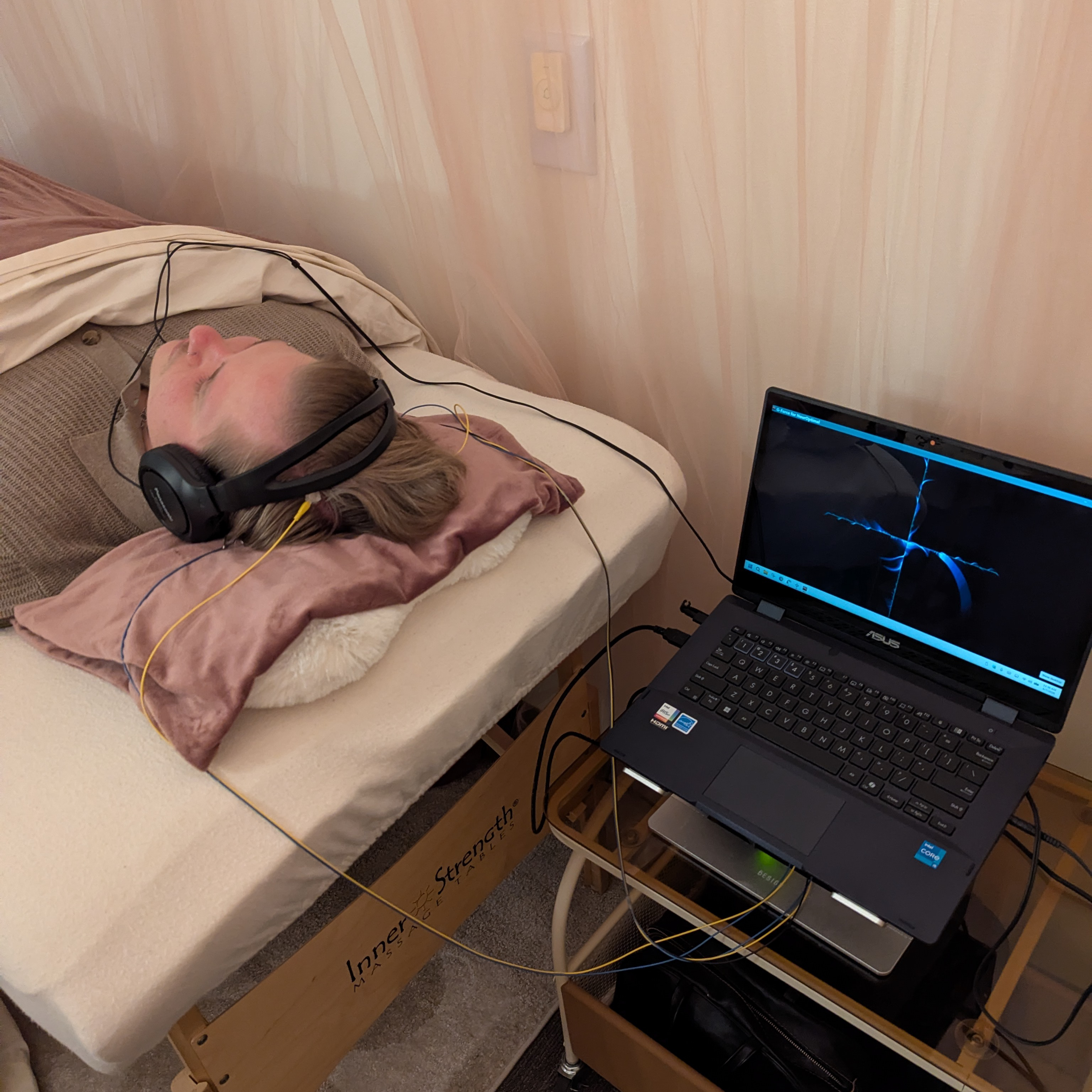
During a session, sensors are placed on the scalp and ears to monitor electrical activity in the brain. The client simply relaxes and listens to music while the system provides moment-to-moment feedback to the brain.
I often explain it this way: NeurOptimal® is like holding up a mirror to the brain.
The brain receives information about its own activity and is given opportunities to make adjustments if it chooses. There is no effort required. There is nothing to force or achieve.
Many clients report feeling calmer, sleeping better, thinking more clearly, and feeling less reactive after a series of sessions. While every person’s experience is different, the goal is not symptom management alone. The goal is improved flexibility, resilience, and self-regulation.
Why I Combine Therapy and Neurofeedback
One of the challenges of trauma treatment is that healing is rarely linear.
A client may be ready to process difficult memories one week and feel completely overwhelmed the next. Their nervous system may become activated before they even understand what triggered it.
When I combine psychotherapy with NeurOptimal®, I often see clients become more capable of staying present with difficult emotions without becoming flooded by them.
Therapy helps clients understand their experiences.
NeurOptimal® may help create the conditions for greater nervous system flexibility.
Together, they can support both insight and regulation.
This combination can be especially helpful for people who experience:
- Anxiety
- Chronic stress
- Burnout
- Emotional overwhelm
- Trauma and PTSD symptoms
- Difficulty sleeping
- Difficulty concentrating
- Nervous system dysregulation
- Feeling “stuck” despite years of personal growth work
My Approach: Whole-Person Healing
My path to becoming a therapist was shaped by my own experiences with grief, trauma, caregiving, loss, and healing. Because of that, I have never believed healing happens only through talking.
In addition to being a Licensed Clinical Social Worker, I am also a Reiki Master Teacher and incorporate holistic approaches that honor the connection between mind, body, and spirit.
When appropriate, I may integrate mindfulness, breathwork, somatic awareness, EMDR, Reiki, sound healing, or NeurOptimal® neurofeedback into a client’s treatment plan.
I do not believe there is one perfect path to healing.
I believe healing happens when enough safety is created for the nervous system to begin doing what it was designed to do: adapt, recover, and move toward balance.
What the Research Says
Research on neurofeedback and trauma continues to evolve, but several studies have shown promising results.
A randomized controlled trial conducted by van der Kolk and colleagues found that neurofeedback significantly reduced PTSD symptoms and improved affect regulation among individuals with chronic trauma histories.
A systematic review examining neurofeedback for PTSD concluded that neurofeedback shows promise as an intervention for reducing trauma symptoms, particularly for individuals who have not responded fully to traditional treatments.
Additional research has demonstrated significant reductions in PTSD and anxiety symptoms following neurofeedback interventions, suggesting that neurofeedback may help support changes in neural networks associated with trauma responses.
While NeurOptimal® itself is not designed to diagnose or treat any medical or mental health condition, many clinicians and clients find it to be a valuable complement to psychotherapy and other wellness practices.
Healing Does Not Have to Be Limited to One Modality
One of the most important things I have learned in my years as a therapist is that healing is rarely about finding the “right” technique.
Healing is about creating the right conditions.
Sometimes those conditions involve talking through painful experiences, reconnecting with the body, or learning how to regulate the nervous system in new ways.
For many clients, the combination of trauma-informed psychotherapy and NeurOptimal® creates a powerful opportunity to do both.
If you have been doing the work but still feel stuck, it may be worth exploring an approach that supports not only your thoughts and emotions, but also the remarkable healing capacity of your brain and nervous system.
Schedule a call with Elise today to get started.
Scholarly References
- Van der Kolk, B. A., et al. (2016). A Randomized Controlled Study of Neurofeedback for Chronic PTSD. PLOS ONE.
- Panisch, L. S., & Hai, A. H. (2020). The Effectiveness of Using Neurofeedback in the Treatment of Post-Traumatic Stress Disorder: A Systematic Review. Trauma, Violence, & Abuse.
- Bell, A. N., Moss, D., & Kallmeyer, R. (2019). Healing the Neurophysiological Roots of Trauma: A Controlled Study Examining LORETA Z-Score Neurofeedback and HRV Biofeedback for Chronic PTSD. NeuroRegulation.