In the third episode of Returning Home, Elise addresses the different ways you can heal yourself through body, mind, community, and spirit. She shares eight healing resources that she has used to better herself. Some of them are personal actions you can do on your own, while other methods need you to be with others. Specific tools work better for some people than others, so it’s best to find the correct method for you.
If you want to learn more about healing resources that you can use to improve and transform yourself physically, emotionally, and spiritually, this episode is for you!
Here are three reasons why you should listen to this episode:
- Find out the many ways you can improve yourself through body, mind, community and spirit.
- Discover eight healing resources that can assist you in your journey of self-discovery and improvement.
- Learn more about Elise’s drop-in group sessions.
Resources
- The previous episode of Elise’s podcast:
- Episode 1 | Returning Home To Yourself From Childhood Trauma
- Episode 2 | How Sobriety Changed My Life
- The Body Keeps the Score by Dr. Bessel van der Kolk
- Hardwiring Happiness by Dr. Rick Hanson
- The Mindful Self-Compassion Workbook by Dr. Kristin Neff and Dr. Christopher Germer
- Adverse Childhood Experiences PDF
- Adverse Childhood Experiences (ACEs) Questionnaire
- Learn about self-healing with Dr. Nicole LePera on Instagram: @the.holistic.psychologist
- How Childhood Trauma Affects Health Across A Lifetime by Nadine Burke Harris
- Sign up for Elise’s Newsletter and receive a FREE PDF to start your self-compassion journey!
- Connect with Elise on Instagram: @elisekindya
Episode Highlights
Resource #1: Yourself
- You are the first and best of your healing resources. Getting to know yourself is the first step toward returning home to yourself.
- When you know yourself, you know what works best for you.
- Sometimes you’d feel that you might want to work with your weakness. However, you could feel at ease with your current progress.
- What works for you doesn’t necessarily work for others.
Elise: “It’s about really like getting honest with, ‘Am I at my best right now or not? Could I feel better? What are the things I’ve been through? What is it that I need to address at this moment?’”
Resource #2: Mentorship, Coaching, and Therapy
- No one goes through life alone. New perspectives can help you detect weaknesses that you’re unaware of.
- One benefit of therapy sessions is freedom. You can express your authentic feelings and worries without fear of judgment.
- Talking to a coach or therapist propels you towards a higher goal from what you’ve set for yourself.
- It helps to be open about talking about your problems. Having someone help you process your concerns and how you feel can make it easier to resolve them.
- If you need help, take advantage of any healing resources you can access. Get help where you can.
Resource #3: Intuitive Spirituality Practice
- Initially, Elise was averse to spiritual practices because she used to equate them with traditional religion. However, connecting with her spirituality opened up her life.
- Listen to the podcast to learn how Elise taps into her spirituality by observing the falling leaves during the fall season.
- Spirituality meditations maximize her different senses and emotions in understanding herself and the others.
- Meditation can be secular; it doesn’t require any spiritual component. We are all spirits living the human experience.
Elise: “It’s something that I recommend to all of my clients is to have this kind of moment with yourself throughout the day, whenever that is.”
Resource #4: Body Work
- The basis of our security is by treating our bodies well. The key to this is by being kind to your body, whether by pampering yourself or taking care of your basic needs.
- Emotional healing begins after you address your basic needs.
- Sitting at a dry sauna is Elise’s remedy in opening up her body to spirituality.
- Our bodies consist of beautiful, powerful, and complex organs.
Elise: “Your body is the vessel that carries you through life.”
- Elise recommends that cold showers are beneficial for the body’s nervous system.
Resource #5: Journaling
- Elise is constantly caught up in her head, especially when she reads a book.
- Journaling supports all other practices and aspects of her life. She does this by recording every detail of the instance she involves herself in.
- As a social worker, Elise values the record-keeping element of journaling.
- Recording your actions allows you to observe the patterns, thoughts, and inner workings of your being.
- In the future, you may revisit your writings to track your previous progress, celebrations, and challenges. Altogether, it compiles a set of evidence of why you need to support yourself.
Resource #6: The Mindful Self Compassion Workbook
- Elise recommends the Mindful Self Compassion Workbook to her clients because it introduces relatable and practical concepts of intuition and spirituality.
- She emphasizes how we are too quick to be kind to others while criticizing ourselves internally for minor inconveniences.
- Elise believes that the workbook could resolve worldly violence if everyone had a copy. Kinder interaction is a stepping stone towards peace.
- People’s treatment of others is a reflection of what goes on in their heads.
- The workbook offers many opportunities for you to practice and contemplate your intuitive learnings.
Resource #7: Adverse Childhood Experiences (ACEs) Study
- The study sums up a person’s exposure to neglect and abuse during childhood and how it shapes their future actions.
- A person’s trauma response develops in relation to the environment and treatment they received while growing up.
- To get the gist of how the research is conducted, tune in to the episode.
- If you experienced ACEs, participating in the study will help you understand why you react the way you do in certain situations.
Resource #8: Drop-in Group Sessions
- The session attempts to combine all the mentioned seven healing resources.
- In 2022, Elise plans to organize a beginner-friendly group session.
- The activities are held live, ranging from experiential teachings, conversations, personal sharings and visualizations.
- From the program, participants could learn compassion and mindfulness in building their spiritual being.
Enjoyed this Episode on Healing Resources?
If you enjoyed this podcast, please make sure to subscribe and share it!
Leave an episode review and share it! If you enjoyed tuning in to this episode, don’t forget to leave us a review. You can also share what you’ve learned today with your friends to help them embody their true, authentic selves. Everyone benefits differently from the healing resources out there, so it helps to have choices — find the best one for you! Anything is possible when you return home to yourself.
Have any questions or lightbulb moments? I’d love to hear from you! Feel free to hit me up on Instagram or send an email at elise@elisekindya.com.
Thank you so much for listening! For more episode updates, visit my website.
Transcript
Elise Kindya: Getting to know yourself is your path to freedom. So the suggestions I make here, like I said, are what have worked best for me, but they might not work for you. And that’s okay. When you get to know yourself, you know what works and what doesn’t work. And it’s about really like getting honest with, “Am I at my best right now or not? What is it that I need to address at this moment?”
Welcome to Returning Home, the Podcast. My name is Elise Kindya, and I am a trauma-informed and intuitive therapist. This podcast is a space that I have created for you to discover a deeper understanding and love for yourself, which leads to expanding what you think is possible in your own life. My goal is for you to feel excited to live your life as your full, authentic self.
By listening to these episodes, you will learn things like how your brain works, my favorite resources for healing, stories from my own life, practices that you can press play on to add to your healing toolkit, and so much more. I invite you to return home to yourself in big and small ways to live the life you desire on your terms. You can live connected, empowered, and aligned. When you return home to yourself, anything is possible. I can’t wait to share all of my insights with you. Now let’s begin.
Hello, and welcome to episode three of Returning Home, the podcast. I am really excited about the topic today. I want to come on here and share the top resources that I find myself recommending either to my clients, or even things that I’ve done in my own life. I approach my work from the biopsychosocial spiritual approach. And this is again, body, mind, community and spirit. And this is how I like to think about the work that I do.
It’s very multi dimensional, it’s very holistic. I like to think about it from all these different angles. And as I talked about in the first episode of this podcast, based on the kind of experiences that you’ve had, you might need a different level or mode of healing based on you know, what maybe like the gaps are or what, what’s the thing that you’re trying to address, you’re going to need a different solution for that, right?
This list was going to be like three items, but it kept expanding. Because I talk about this stuff all the time. This is my jam, this is the kind of thing that I love to do. And so we’ve got more like seven, eight things. And there are like levels to these things. So take what resonates, leave what doesn’t, you know, all of these things might not be for you at this point in your journey. But these are just some of my favorite things that I like to recommend.
With that being said, let’s get started. Number one, the first resource that I would recommend to anybody is you, yourself, you are your best resource. Getting to know yourself is your path to freedom. So the suggestions I make here, like I said, are what have worked best for me, but they might not work for you. And that’s okay. When you get to know yourself, you know what works and what doesn’t work.
It’s about really like getting honest with, “Am I at my best right now? Or not? Could I feel better? What are the things I’ve been through? What is it that I need to address at this moment?” And there’s been something kind of circulating in the aether lately around like, you don’t always have to be doing something in service of your healing, right? Like, you could just decide that how you are today in this moment is good enough, and there’s not going to be any striving or any you know, wanting to improve.
You could just say, “I’m okay today. And that’s fine.” And you could say “Hey, I do know I have some blind spots. I do want to work on some things. These are the things I want to work on.” But again, you are your best resource when you get to know yourself and understand who you are and how you operate in the world. It becomes much more clear like what is for you and what is not for you.
Not everything is for everyone and not everything is for you. And you aren’t for everyone and that’s okay. So, getting really comfortable with getting clear about who you are and the kind of person you are, in the end the person you want to be, the kind of goals that you have for yourself, the vision you have for your life. Yeah, it makes it just more clear what kind of life you want to be living and what action you can take from there.
The second resource of course is going to be therapy, coaching, and getting support mentorship. No one is doing life alone. So if you think you need a fresh perspective and objective view of someone to help you see your blind spots, then I encourage you to receive the help that you need. You know while we are kind of in life, like alone, we are our own sovereign beings and we do get to make decisions for ourselves and decide who we are and what works for us and what doesn’t, it is always so helpful.
And I know in my own life, you know, therapy and coaching has been something that I’ve accessed pretty often. I think I probably went to my first therapist, when I was like, seven. My parents got divorced. So you know, that’s the thing when parents get divorced, they put the whole family in therapy.
That didn’t work at that time. But I’ve been in therapy pretty consistently, probably, since I was like, 14. I’m in therapy right now. I love it. I think it’s the greatest thing, you don’t have to show up any type of way other than exactly how you feel in the moment. And I really value the therapy that I’ve received. And I love being a therapist, because it is exactly how you show up in that moment is what we’re going to be working with. And that is perfectly fine and beautiful.
As I mentioned, again, in that first episode, there are sometimes ways that I challenge my clients, especially when they’re saying, “Hey, I have this problem, and I’d like some help with it.” Of course, I’m going to help them see some blind spots and help them with some suggestions for how to address the problems that they’re having. But I have this post on social media that I like to post every now and then that says, it’s okay to talk about problems.
That’s how you find solutions. So sometimes we just need somebody to process things through with. I, myself, am a verbal processor. And so therapy has been invaluable for me to be able to just run my mouth, and talk through some things that have been rolling around in my head, but I hadn’t, you know, said them out loud. It’s so helpful for me to just even hear my own voice talking, even with this podcast.
Honestly, therapy, coaching, support, mentorship, I think, is something that can point us to where we need to go. And we know what your vision for your life is. If you’ve tapped into yourself and use yourself as your best resource, as your own best asset, the vision for your life. So then you can access these people outside of you, coaches and mentors to help you pull you along towards that goal and help you set some higher goals or your sights on something else.
Help give you some processes too. Because, like I said, no one’s doing life alone. Nobody is born knowing everything, like there’s no possible way. You need to access help. So there are people out there that can help.
With that being said, my third resource that I recommend, all the time is having some type of an intuitive spirituality practice. And there is, I think, a lot of resistance here. I want to do a whole podcast episode just on religious trauma. Because when I hear the word spiritual or spirituality, it used to make me think about religion. And I was very averse to that. Until, you know, several years ago when I started practicing spirituality, in my own way.
I talked about this in the previous episode about my spiritual awakening and my spiritual journey. It’s why it’s such an important resource that I recommend to people I work with, and really to anyone that will listen to me. Because when I started connecting with my spirituality, is when my life started opening up. And there are so many ways that you can do this. I mean, from reiki, to meditation to tarot and oracle cards, breathwork, yoga, journaling, astrology.
There’s so many ways that you could tap into intuitive spirituality. It could even be a traditional religious practice, right? But for me, like I said, when I started opening up to myself, and really resonating with some spiritual messages, so much has opened in my own life and in my own, just in my daily experiences. So for instance, today is Monday, November 15 2021, which is when I’m recording this podcast episode.
I’ve also been seeing this all over my Instagram as well. A lot of people who live here in Richmond. Fall is like showing all the way off right now. The leaves are so amazing. It’s so funny because normally, in the fall, it seems like overnight, the leaves change and then they fall off the trees. Then, they’re like, “We missed the moment,” and this moment of these leaves changing has been going on now for probably a couple of weeks.
It just keeps getting better and better every single day. So how I experience spirituality in these moments is feeling that I’m a part of nature, like I’m made up of the four elements. Thank God I have eyesight, I can see the beauty of the trees. So I kind of tap into my intuition sometimes. Sometimes with my work, I have a slower morning, so then I can wake up and decide what I’m going to do that morning.
Today, for instance, I thought, “Oh, I have my whole morning open, I’m gonna ride my scooter to the gym.” And so I started up my scooter and I was riding up the street to my gym and just looking at the leaves and noticing the archways that they made over the street, and just like, it’s so beautiful to just feast your eyes on, fall in Richmond right now. And just reminding myself that I am here, I am a channel.
So during this scooter ride, I was participating in my intuitive spirituality practice by having like a mindfulness, kind of walking myself through a mindfulness exercise of noticing the leaves, so my sight and the temperature, the feeling, and the five senses. Also walking myself through a reiki visualization that was really helpful and healing to me. So that’s like one example of a time when you’re doing something ordinary, like taking yourself to the gym.
You can make it a spiritual practice. My morning meditation. So meditation can be really secular, like it doesn’t have to have any kind of spiritual components to it. Although I would argue that we are all spiritual beings, we’re all spirits having a human experience. And so when you sit with yourself and you return home to yourself, you might notice that you’re having a spiritual experience, because you’re being with yourself.
In my meditations, I’m always inviting in reiki energy. I’m always drawing tarot and oracle cards, I’m always working with the breath, I’m always visualizing, I’m usually doing a journal entry. It’s a really well rounded, full body experience, so to say, and a full spirit experience. It’s something that I recommend to all of my clients, to have this kind of moment with yourself throughout the day, whenever that is.
I just described to, for me, one of them riding my scooter to the gym, the other doing my morning meditation. But any moment can be a moment for you to tap into your intuition. And to connect with your spiritual side.
By intuition, I just mean this deep knowing that you have that, in your bones, like who you are, what you’re about, what feels right to you, what feels like the path you want to walk, tuning into those feelings, tuning into that knowing and taking the steps into that version of yourself. Being in touch with the five senses, being in touch with your emotions, and the emotions of other people.
These are all different ways that you can conceptualize that word “intuitive.” Just kind of knowing without knowing why, right? It’s like it’s just the truth. And so that has been a really important practice for me and a really important unlearning in my life of not equating spirituality with religion. Another piece of intuitive spirituality for me when I talk about “knowing without knowing why is journaling.
I love to journal, I fill up journals like nobody’s business. And sometimes I will use some prompts or I will also just do kind of, some free writing. And I feel like that’s more of the spiritual connection for me is free writing, not really knowing what I’m gonna write about, but just opening up my mind and my heart to what wants to come through. And that has been a really profound way for me to express myself. I will go more into journaling later because it is, I think of it as its whole other resource, not just a spiritual resource. So I will get to that in a little bit.
The next resource I want to talk about is this kind of going back to the first one with you going back to yourself. But body work. The body as we know the body keeps the score. And treating our body well is going to help us feel safe in this moment in time. However, you can adjust from the sympathetic nervous system to the parasympathetic nervous system, you will be doing your body such a huge service.
So this can range from massage, floatation therapy, cold showers, cold plunges, acupuncture, chiropractic support, movement, sitting in the sauna. Anything that you can do for your body, eating well, things like that. And just taking care of some basic needs, like your body temperature, so wearing clothing appropriate for the season that you’re in. Sleep, getting eight to nine hours of sleep a night. Some bodies need less, some bodies need more.
Just depending on who you are. Knowing yourself at a deep level and giving yourself what you actually need in terms of sleep. Like I said, food, like eating nutritious food, and drinking enough water, like these kinds of things are so important to emotional healing and to physical healing and to spiritual healing. Your body is the vessel that carries you through life. And so what is one small thing that you could do today to add to your arsenal, right?
Something that I have enjoyed doing is so I go to the gym, and I do like a 40 minute ish workout. Nothing too crazy, just like something to get my blood flowing. And sometimes I’m a little out of breath, things like that, get my heart rate up. And at the end of the workout, I love sitting. We have a dry sauna in the shot, a dry sauna in the gym, excuse me. And I love just sitting in there for like 10 minutes this morning.
Actually when I did that, I opened my notes app and wrote like a whole Instagram post and then posted it on Instagram, so it helps me kind of open up my body to be more of a channel to be more of a vessel for those spiritual lessons I was talking about. But it doesn’t have to mean that for you, it can just be just that basic taking care of your body. Especially if you’ve experienced trauma, especially if you’re not used to being treated well.
Treat yourself like the royalty you are, treat yourself like the important person that you are by doing nice things to your body for yourself. This can also be like pleasure, right? So one of the stress hormones cortisol that builds up in the body all day long, when we’re worrying, when we’re anxious, when we’re overthinking and all of that kind of stuff. When you have an orgasm, it flushes all the cortisol, you know, out of your bloodstream, it filters it.
It goes through its processes to get you know, eliminated from your body. Your body is such a powerful and complex and beautiful organ, like your whole body is just this one big organism that just wants nothing more than for you to have a good life. So these are some things you can do to take good care of it. I saw something recently, I got an email from one of the float spas here in Richmond.
They have now an ice water plunge as well as a hot sauna like and they call it this fire and ice treatment. And that’s something that I am really wanting to try. And so I’ve been turning my the shower water cold at the end of the shower. And if you want to learn about that cold water exposure and all of that; Wim Hof, I would say, is a really good resource for that, and why that’s so good for our nervous system. I’ve been trying to rev myself up by doing my cold showers because I know that water is going to be really cold. So, it’s something I want to try.
And then going so the fifth resource I want to mention that I want to delve a little bit more in depth to is journaling. So I mentioned that a little bit before in the intuitive spirituality section of this podcast. But I really believe and so for me, I’m an Aquarius and I’ve mentioned this before, I’m very much in my head. I like being in my head.
I like that I’m just reading Hardwiring Happiness by Rick Hanson and he says something in there about how the brain is the most important organ of the body and I’m like, “Yes, sir.” Because I keep hearing all of this about how the heart is the hardest place to be. And I totally agree with expanding the heart space. But I just love hanging out in the brain. So I loved reading that in that book.
So for me, I just feel like journaling, in my own experience, has been a practice that supports all other practices in my life. If I’m doing any intense body work, or if I’m trying to figure something out with my body, I’m going to open my journal and write about it. If I’m having a hard time with a family member or a friend, I’m going to open my journal and write about it. If I’m having difficulty at work, or something is bothering me, I’m going to open up my journal and write about it.
If I’m sitting at my altar in the morning, and having my meditation, and I’m having an intuitive download, I’m opening my journal and writing about it. Like it’s just, it’s what I do to support myself in all other aspects of my life. With journaling, you can do it in many different ways. Like I mentioned earlier about using prompts or free writing, if you’re familiar with the holistic psychologist, she offers a future self journal that has some prompts in there.
It’s meant to be kind of like a pretty quick kind of check in with yourself every single day really focused on keeping promises to yourself. And that’s all repairing teamwork, and very beautiful. There’s also free writing. That’s more of what I do is just kind of opening up the journal on saying what wants to flow through today.
You can also get books that have journaling throughout them. The next resource I’ll talk about is the Mindful Self Compassion Workbook. And that has prompts all the way through it. But journaling is so important, I think, because there’s like this aspect of record keeping. I’m a social worker. So that’s something that I value very highly. So you get an inside look into your patterns, your thoughts, your inner workings.
You can revisit all of these writings that you’ve done in the future, to see how far you’ve come to see how much you’ve learned and grown, you’re able to really see all of the progress that you’ve made all of the celebrations, all of the challenges, the ups and the downs and how you pulled yourself through how you maybe even asked for support how you got your community to help you out.
So journaling, I feel, is just something that can give you a lot of evidence to support why you are a good person and why you are trying and how you are showing up in your life. And to give you lots of reasons to be on your own side. That is my personal take on journaling. It is a very grounding practice. And especially so I used to go to breathwork classes before the pandemic.
That was something that after breath work, because we’re so much in this kind of spiritual space, in breath, work and in our bodies, and just really like flowing, that coming back down to earth. And like putting pen to paper and writing down my experiences. If I had any visions, or any breakthroughs or any aha moments, I would want to capture those pretty quickly. And really just sitting feeling my body on the ground, feeling my journal in my lap, like feeling the pen in my hand, writing the words down.
It was just such a beautiful way to ground this very spiritual thing, to claim it as my present moment and to say, “Okay, this is what I’m going to do with it going forward.” Yeah, lots of reasons to journal. I think, if you don’t journal, I would highly recommend doing it. If it’s intimidating, I get it. And I would just so much love to talk with you more about why that is and what we could do to help you out with having this be a less intimidating mode of healing.
I mentioned a few minutes ago, this sixth resource I want to talk about is the Mindful Self Compassion Workbook. I mean, gosh, it is just I was telling somebody about it a couple weeks ago, and I was saying, “It’s like 17.99 on Amazon. But if you spent like $1,000 on it, it would still be worth it.” It is probably one of the things I recommend to most of my clients because it’s so practical. It’s so relatable.
It’s so everybody gets it like when you read chapter one, and she talks about, or I should say they talk about because it’s written by two people, how we’re so quick to offer kindness to a friend. And we beat ourselves up in our own mind and we make ourselves out to be these monsters, right? And people read that and they’re like, Oh, that’s so relatable. I do that all the time. Why is it so hard for me to be nice to myself and take my own side?
I really believe that if every single person on the planet received this workbook and really did the work, that we wouldn’t have the violence and the hatred that we have today. We wouldn’t have this anger. We wouldn’t have racism. We wouldn’t have sexism. We wouldn’t have homophobia, like we wouldn’t have these problems. Because what people are dishing out is what they think they deserve is what they think of themselves.
There’s this thought around like, the whole world is a mirror. So if you’re willing to treat somebody badly, if you’re willing to hate another whole group of people, imagine what it’s like to be in your own mind about yourself. And yeah, we’re not talking about people that literally have narcissistic personality disorder. But just like everyday people that have hate in their heart, that’s a big problem.
I believe that if people could treat themselves with more gentleness, and more kindness, then every interaction that we would have in public and in the greater world, would be so much more peaceful. And I really, if you don’t do anything else on this, from this podcast, as far as resources. I fully, fully, fully recommend that you grab this workbook, and give it a try, especially if you have a lot of negative thoughts about yourself.
The workbook has 24 chapters. It comes with, like I said, there are journaling prompts all throughout, so plenty of opportunities to practice and reflect on what you’re learning. And in the back, there are several recorded meditations that you can access after purchasing the workbook. And so it’s really just like this one stop shop for if you want to start being more kind to yourself, if you want to start practicing meditation.
If you want to be more in this cycle of giving and receiving, like you deserve love, and you deserve to feel happy, confident in your life, if those are the kinds of things that you’re trying to incorporate more of, like, go get this workbook. It’s kind of a no brainer. Yeah, I mean, I can’t really speak highly enough about it. It’s a really beautiful practice. So I highly recommend the Mindful Self Compassion Workbook by Kristin Neff, and Christopher Girma.
I will definitely link this in the show notes. There are many versions of this on Amazon, but I recommend one specific one. It has a view of walking from a boardwalk into the beach. And there’s a really nice sunset. And it says the Mindful Self Compassion Workbook, a proven way to accept yourself, build inner strength and thrive. Yeah, I just really liked this resource. I can’t recommend it enough. So we’ll link that in the show notes for you.
The seventh resource that I would love to recommend to you is the Adverse Childhood Experiences Study. So namely, the questionnaire and I will link this in the show notes as well. I changed some of the language for my clients, because some of the language is strange. The choice of words is strange. I’ve even had clients say, “Uh, I can’t relate in this way. But I can relate this way.” I’m like, “Oh, thank you for pointing that out. That is not inclusive language.”
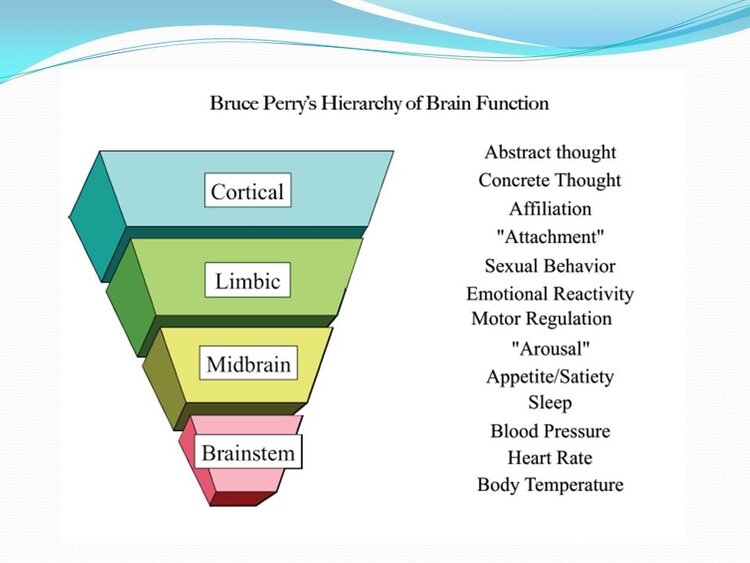
The PDF is available for free online. The reason I recommend this is because I believe that knowledge is power. So the ACES study, yes, it’s a bummer. It’s all about abuse and neglect and exposure to violence in childhood. But I think that this information is really valuable. It pings back to episode one when I talked about the neurosequential model of therapeutics. So our brains and our bodies develop in relationship to our treatment and our environment.
So if you’re struggling with things in your adulthood, we can probably trace it back to something that happened in childhood. The way that this study even came about was that one of the researchers was holding a group with people that went through some, I think, like gastric bypass surgery or something like that. Or they went on some like women that were trying to lose weight.
When they were having great results and they left and they came back and they were gaining all this weight back and he was wondering why and when they surveyed these women, it turned out that a very large percentage of them and the women that were gaining weight back had all been sexually abused in their childhood.
So that got this researcher, really, not to say excited, but he was like what is going on here finding the correlation to adverse childhood experiences and health outcomes in adulthood. A couple of other things that I’m going to link in the show notes is a TED Talk by Dr. Nadine Burke Harris, about ACEs. There is a movie called Resilience that was put out a few years ago that goes into what ACEs are, and why they’re important to know about.
But like I said, I think that this knowledge is power. I think that it can help you understand yourself better if you experienced adverse experiences in childhood, it can help you kind of take some of that weight off of your own shoulders, like “Oh, this is my problem, I’m never going to get better. I always do things this way. I’m such a failure.”
When we experience adverse experiences, when we experience trauma and childhood, it literally changes the way that your brain and body has developed over time. And it’s become adapted, or mal adapted to your environment and your treatment. And so it’s not your fault if you’re struggling with these things. But the fact that you’re willing to look at it, we can offer some solutions for like, how do you deal with this? Right?
So that is why I recommend this resource so highly. I do this the ACES questionnaire in the first session with all of my clients, just because I want to have a baseline of “Who is this person? Where are you at?” Not to say that if your ACEs score is zero, that there’s “No, I shouldn’t have any problems, because my score is zero.” No, there are other things going on in life that maybe aren’t childhood trauma. But some of my other clients have like eight, nine.
There is a documentary about a woman that has an ACES score of 10. And she has helped the researchers with some work. So that would be something interesting to check out if you were curious about that. But I’ll definitely link some things in the show notes as far as ACEs, I think it’s a really valuable resource for people to know about.
I’m always talking about that on my Instagram, and with my clients, of course. So if you ever have any questions about what ACES are, I’m definitely here for it. And please reach out to me if you do.
Then the last resource I’m going to recommend today, so this is number eight. I’m going to have some events coming up in 2022. And I think that these will be morphing kind of into a membership with me. But I’m going to be combining a lot of these resources that I mentioned into events. If you are thinking like “God, this is so much I have no idea where to start or like this seems cool, but I need maybe some guidance, or I see Elise as more of like a mentor with this.”
Do not fear, because I’m going to be offering drop-in groups. Well, they’re called drop-in group sessions. They’re just really going to be events that will be live. And yeah, opportunities for us to come together. Though. They’ll range from, you know, experiential, to teachings, to conversations to sharing, like all kinds of things. That yeah, visualization, reiki distance, healing, mirror work, maybe some somatic experiencing movement, things like that. Compassion, mindfulness practice, like all kinds of things.
So I hope that you will get excited for those events. I’m really excited about it. More to come on that soon. If you want to learn more about that, definitely subscribe to my newsletter, as well as follow me on Instagram. Because I will be talking more about that in more frequency and depth as the days and weeks and months go on. So I would love to see you there.
Okay, so those are my top eight resources for healing that I talk about the most either with my clients or with other people, anyone that will listen to me, my Instagram community, and with myself. These are things that I’ve done myself and that I can see a big difference in my own thinking, in my own perspective, in my reactivity, which not to say I’m not reactive, but it’s gone down significantly.
I just feel like my quality of life is so much better since implementing these things. There are more and more and more that I could go into, but I don’t want to just dump it all here in this episode. But these are the ones that come to mind and the things that I use the most in my life. As this podcast goes on, I might even talk about more in the future. But yeah, these are my top resources that I find myself talking about the most.
I appreciate you being here listening to this episode, I hope that you got something out of it. If you did, I would so much appreciate you rating my podcast and leaving a review. That would be really amazing. I would love to hear your insights and hear your questions, comments, please.
Like I said, follow me on Instagram so we can keep the conversation going. I’m always down for a conversation there and subscribing to my newsletter so that you can keep up with all that’s going on on my end. And yeah, thank you so much for joining me. I really appreciate it, and I will catch you on the next episode.